
Fact-checking: Why journalists must put accuracy above speed in election reporting
By Mohammed Ismail
The growing threat of misinformation, political propaganda and digitally manipulated content has reinforced the need for journalists to embrace fact-checking as an indispensable component of modern journalism, particularly as Nigeria approaches the 2027 general elections.
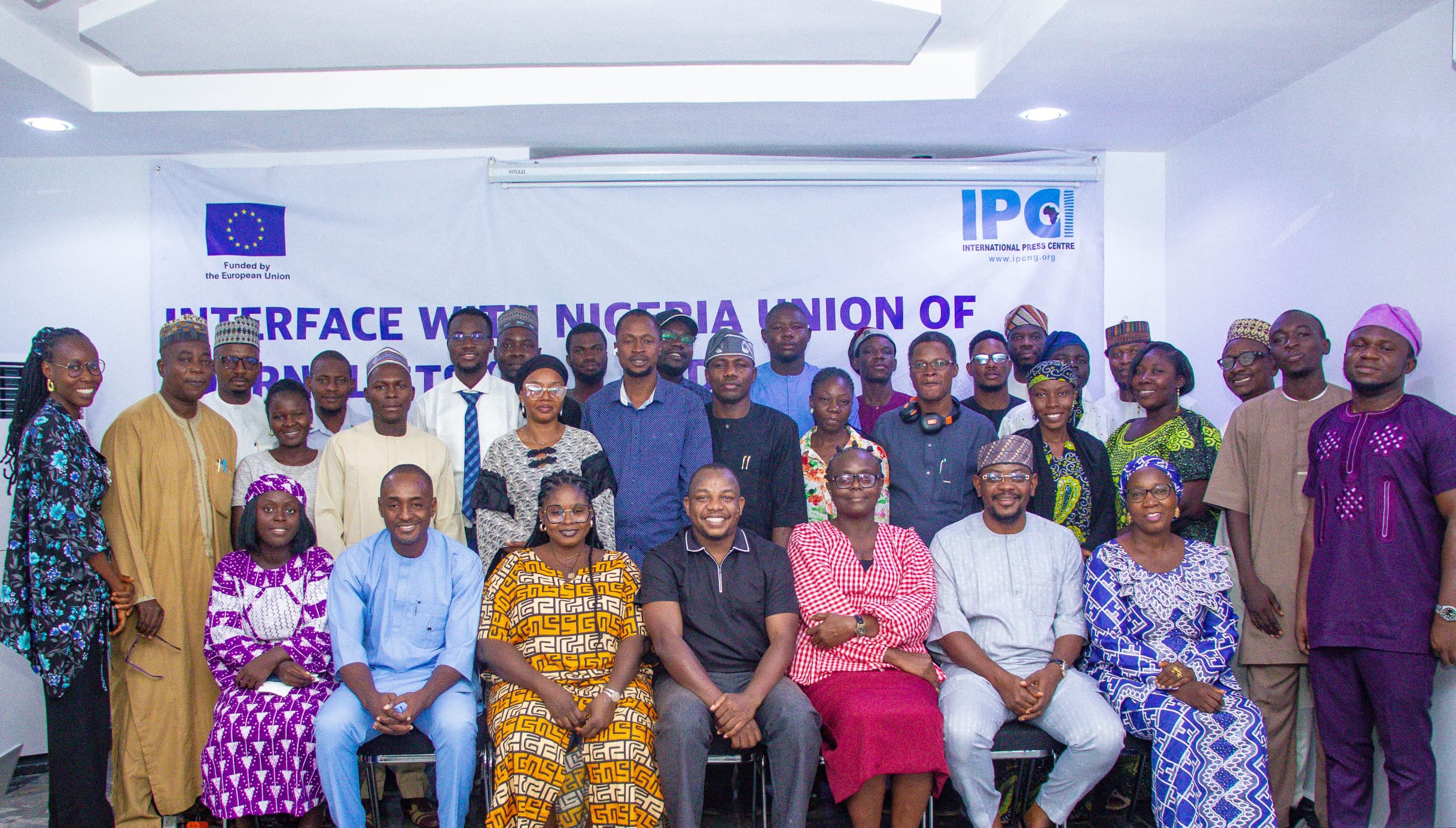
This was the central message at a one day workshop organised by the International Press Centre (IPC) for journalists, editors and publishers in Yola, Adamawa State, to strengthen professional capacity in electioneering reporting, fact-checking and democratic accountability.
The workshop, held under Component Four of the European Union Support to Democratic Governance in Nigeria Programme, provided an opportunity for media practitioners to examine the dangers of information disorder and acquire practical skills for identifying, investigating and exposing false or misleading information.
Related news
Despite OGP buy-in, Adamawa govt fails major financial integrity test
Dougirei secondary school: An eyesore sharing space with Adamawa govt house
Adamawa’s huge debt elicits furore amidst rising allocations
At a time when social media platforms have become major channels for political communication, campaign activities and public debate, the need for journalists to distinguish facts from falsehoods has assumed greater significance.
The Executive Director of IPC, Dr Lanre Arogundade, in a welcome address delivered on his behalf by Stella Nwofia, the program manger urged journalists to strengthen professional standards and move beyond conventional event-driven election coverage to issue-based and citizen-centred reporting.
He argued that elections should not be viewed merely through the activities of political parties, campaign rallies, candidates and the eventual announcement of results.
He counselled journalists to pay greater attention to the aspirations, concerns and expectations of citizens and interrogate the capacity of political office seekers to address them.
Arogundade warned that sensational reporting, unverified claims, inflammatory rhetoric and the unchecked circulation of misinformation and disinformation could undermine public confidence, deepen social divisions and weaken democratic institutions.
He therefore urged journalists to resist the temptation to sacrifice accuracy for speed, insisting that fact-checking and verification must become integral to responsible electoral journalism.
The workshop also underscored the importance of examining political promises against available evidence, scrutinising policy proposals and holding elected officials accountable for their performance.
In a presentation on election reporting and citizens’ priority concerns, Dr Shedrach Idi, Head of the Department of Public Relations, Faculty of Communication and Media Studies, Taraba State University, Jalingo, challenged journalists to make the electorate, rather than political actors, the centre of their reporting.
He encouraged media practitioners to investigate the challenges confronting communities, identify citizens’ expectations and examine whether the solutions proposed by candidates are realistic, achievable and responsive to public needs.
One of the critical areas of the workshop was the practical understanding of fact-checking and how journalists can incorporate it into their daily reporting routines.
Facilitator Olusola Oludiran, a journalist and fact-checker with Nigerian Democratic Reports, explained that fact-checking involves systematically investigating claims, statements, photographs, videos and other information to establish their authenticity and accuracy before they are published or circulated.
He emphasised that journalists must not automatically accept information supplied by political parties, government officials, campaign organisations, public figures or social media users without independent verification.
He said the process begins with identifying a specific claim that can be tested against evidence. A journalist must establish exactly what is being claimed, who made the statement, when and in what circumstances it was made.
He noted that another important step is to trace the claim to its original source and obtain credible supporting evidence. He added that the process may involve consulting official records, government documents, electoral statistics, credible research publications, public databases and experts.
Oludirsn added that where a claim concerns government expenditure, employment figures, constituency projects, public infrastructure or statistics, journalists should endeavour to obtain the relevant official records rather than depend solely on statements made by interested parties.
He said equally important is the principle of rigoursous cross-checking of information confirmed through multiple independent and credible sources.
He noted that a claim does not become factual simply because several social media accounts have repeated it. The facilitator also demonstrated the importance of digital verification tools, including InfoVerity, in examining information circulating online.
For photographs and videos, he said journalists must establish their original source, date, location and context adding that an authentic photograph can still be used deceptively when it is presented as an image of an entirely different event or location.
He said tools such as reverse image search, TinEye and InVID can assist journalists in tracing the origin of photographs and examining video content. He however noted that technological tools should complement, rather than replace, human investigation and editorial judgement.
He noted that the emergence of artificial intelligence has made this responsibility even more urgent adding that digitally generated photographs, manipulated recordings, cloned voices and deepfake videos can make fabricated events appear genuine.
Oludiran noted that journalists must exercise additional caution when dealing with sensational audio-visual materials, especially those involving political candidates and public institutions.
.