Adamawa advances inclusive education with new schools, renovations, teacher recruitment
In a significant push toward inclusive and foundational education, the Adamawa State Government has undertaken major reforms to improve access to quality education across the state. These efforts include the construction of 21 brand new schools, the renovation of 1,775 existing ones, and the recruitment of over 2,000 teachers.
These developments are part of a broader initiative to enhance educational opportunities for children and support the vision of an inclusive and equitable learning system.
Related news
Two more Adamawa LGs to be free from open defecation as UNICEF unveils DGIS – ASWA III
NCoS Adamawa Command mulls legal action against SaharaReporters over false reportage
Adamawa woman regrets denying first two children polio vaccine
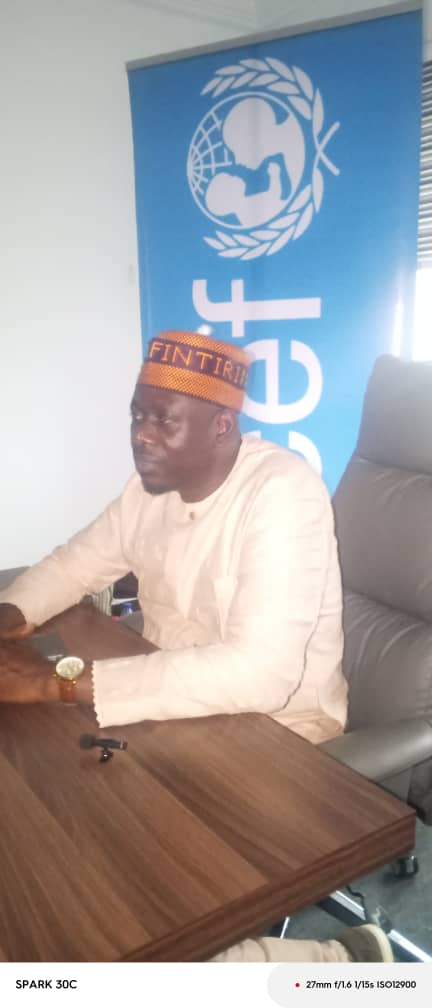
Godwin Lucky, the UNICEF Focal Officer at the Ministry of Education and Human Capital Development in Yola, made this known during a media dialogue organized by the Ministry in collaboration with UNICEF.
He outlined the substantial progress the state has made in the education sector while reviewing key reform trends. According to him, the Adamawa government has strategically reformed education policies to improve access, learning outcomes, and system-wide efficiency.
In addition to the new school buildings, the government has constructed 553 classroom blocks, provided 85,340 seats for students, and supplied 22,469 pieces of furniture for teachers.
He added that infrastructure improvements have also included the installation of boreholes in 56 schools, aimed at enhancing hygiene and access to water for students and staff.
These efforts, according to Lucky, reflect a clear commitment to not only expand educational access but also improve the learning environment.
He said to ensure the sustainability and effectiveness of these reforms, the government has harmonized its education policies to reduce redundancy and boost efficiency. Annual school censuses are now conducted to support evidence-based planning, while the Education Management Information System (EMIS) has been strengthened in all local government areas, allowing for better data-driven decision-making.
Despite these significant strides, Lucky acknowledged that challenges remain. Chief among them is the persistent high number of out-of-school children, particularly in rural communities where funding remains inadequate and the quality of education is still low.
He stressed the need for alternative learning pathways, such as the Accelerated Basic Education Programme (ABEP), the Nigerian Learning Passport (NLP), and community learning hubs.
Furthermore, Lucky urged the government to prioritize the professional development of teachers, noting that a well-trained workforce is crucial to quality education.
Expanding on the current state of early childhood education, Abdurrahman Ibrahim Ado, a UNICEF Education Specialist from the Bauchi Field Office, presented sobering statistics.
He revealed that more than half of children aged three to five years are not prepared for school. Across Nigeria, one in three children remains out of school, with a staggering 10.2 million at the primary level and 8.1 million at the junior secondary level. Even among those enrolled, learning outcomes remain poor—about 70 percent of children are not achieving basic literacy and numeracy skills. Out of an estimated 37 million school-age children in Nigeria, around 25 million are not effectively learning.
Ado also highlighted gender disparities, particularly in rural areas noting that only 9 percent of girls in these communities complete Junior Secondary School (JSS), compared to 25 percent of boys. This gap, he noted, underscores the need for targeted interventions that support gender equity in education.
While presenting an overview of the Global Partnership for Education-Accelerated Funding (GPE-AF), Ado said that at least 160 formal schools and Early Childhood Education (ECE) centers will benefit from the program. These institutions will be supported by a dedicated team of 670 teachers and facilitators.
The objectives of the GPE-AF include ensuring safe and inclusive educational continuity, providing cash assistance to the most vulnerable families, and promoting resilience and well-being among children and adolescents. These initiatives are expected to complement the state government’s ongoing efforts and provide additional support for learners across Adamawa.