Alkalanci moves to de-escalate disinformation as 2027 election approaches
By Mohammed Ismail
Religious leaders in Adamawa State have been urged to take a leading role in combating fake news, misinformation and divisive narratives capable of threatening peaceful coexistence, particularly as the country approaches the 2027 general elections.
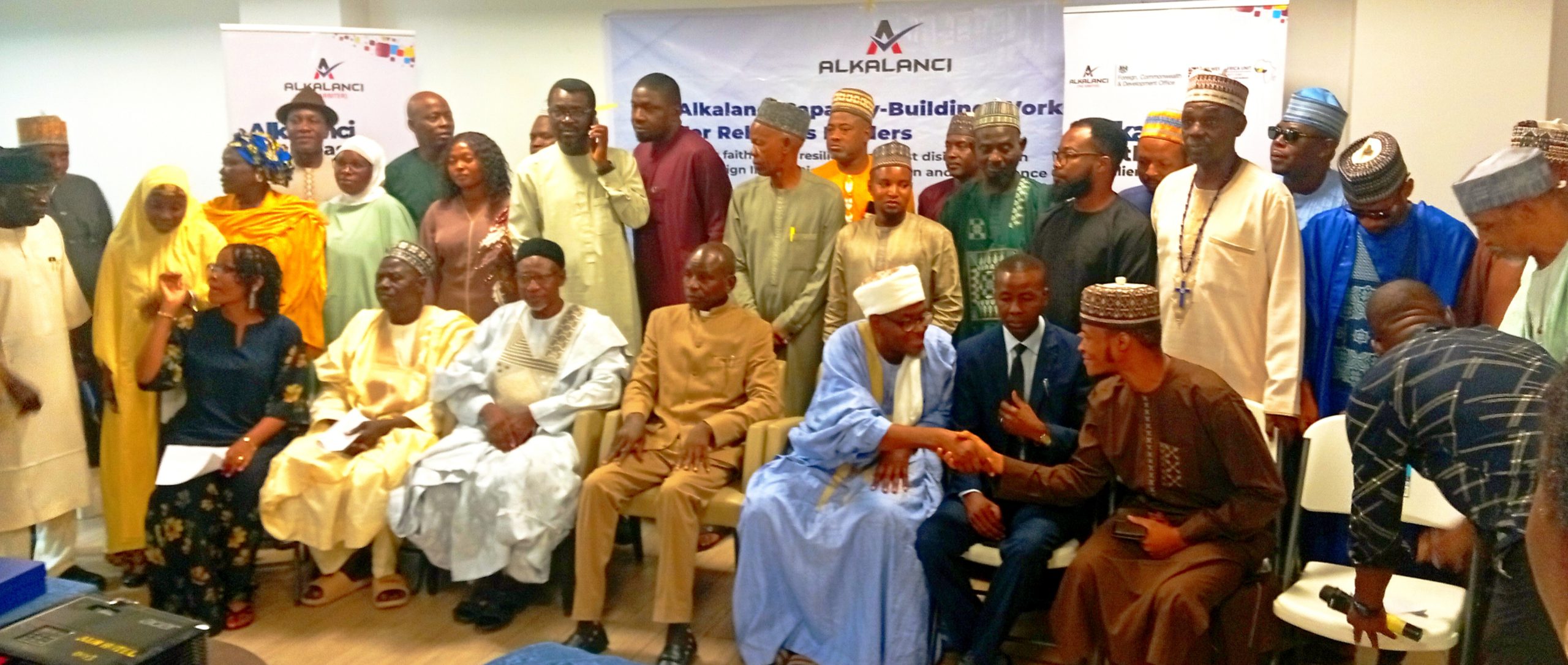
The call was made during a two-day workshop organised by Alkalanci, a non-governmental organisation, with support from the Foreign, Commonwealth and Development Office (FCDO) and the ISF West Africa Unit.
Related news
FG warns state govts against peace deals with bandits
False recruitment: Deal with Fake News Merchants, CSO urges NAHCON
Adamawa APC crisis: Bilal vows to sue SaharaReporters over malicious report
The workshop, themed “Scaling Faith-Based Resilience Against Disinformation and Foreign Information Manipulation and Interference (FIMI),” brought together Christian and Muslim religious leaders to strengthen their capacity to identify, challenge and prevent the spread of misleading information within their communities.
Speaking during an interview on the sidelines of the workshop, Chairman of the Christian Association of Nigeria (CAN), Adamawa State chapter, Rev. Joel Manzo, described the initiative as timely, saying unverified information had become a major source of confusion, misunderstanding and conflict in society.
Manzo said the promotion of responsible communication was essential to the sustainance of unity and peaceful coexistence among the diverse ethnic and religious groups in Adamawa.
He stressed that people must learn to exercise restraint in their choice of words, avoid derogatory statements and recognise the dignity and value of others, irrespective of their religious or cultural backgrounds.
According to him, peaceful coexistence remains the foundation of development, warning that meaningful progress would be difficult to achieve in an atmosphere of suspicion, hostility and misinformation.
He urged participants to take the training seriously and ensure that the knowledge acquired was transmitted to their respective congregations and communities.
“You cannot give what you don’t have,” he said, emphasising the importance of understanding the principles of information integrity before embarking on community-level sensitisation.
Similarly, the State Secretary of Jama’atu Nasril Islam (JNI), Adamawa chapter, Mallam Bappare Umar Kem, expressed satisfaction with the initiative, describing it as particularly important for a multi-ethnic and multi-religious state like Adamawa.
Kem said the workshop would equip religious leaders, Islamic scholars, pastors and traditional rulers with the necessary skills to prevent the spread of false information capable of triggering tensions between communities.
He called for the expansion of the programme to local government areas, wards and grassroots communities, arguing that its impact would be limited if the knowledge remained confined to the few religious leaders who participated.
On the approaching 2027 elections, the JNI secretary expressed concern over the activities of unprofessional social media users who circulate information without verifying its authenticity.
He observed that the widespread availability of smartphones and social media platforms had made it possible for virtually anyone to create, manipulate and distribute information, sometimes with little consideration for its consequences.
Kem, however, maintained that religious leaders could help minimise the problem by educating their followers on responsible information consumption and dissemination.
He also appealed to professional journalists and other information practitioners to guide social media users, particularly those without formal media training, on how to communicate responsibly and avoid misleading the public.
Explaining the rationale behind the workshop, Alkalanci Programme Manager, Victoria Bamas, said the organisation identified a widening gap between the speed at which false information spreads and the capacity of fact-checkers to detect and debunk it.
She said the situation informed the decision to adopt a community-based approach that would empower trusted and influential individuals to help build public resistance against misinformation.
Bamas explained that religious leaders were deliberately selected because of their influence, credibility and direct access to large congregations across different communities.
She said the organisation was implementing a train-the-trainer model through which selected participants would acquire media and information literacy skills and subsequently transfer the knowledge to their followers.
According to her, one of the disturbing developments in the information space is the growing monetisation of fake news, propaganda and sensational content.
She noted that some social media users deliberately circulate false or exaggerated stories because increased readership, engagement and online visibility can generate financial benefits through advertising and other commercial arrangements.
Bamas said the financial incentives attached to online engagement had encouraged some individuals to prioritise sensationalism over accuracy, thereby worsening the misinformation problem.
She disclosed that Alkalanci was training 20 religious leaders in Adamawa State under the programme, with smaller training groups adopted to ensure practical participation and effective learning.
The programme manager said the organisation had also established a monitoring and evaluation mechanism to assess the impact of the training and determine whether participants were successfully transferring the knowledge to their communities.
She cited Gombe State as an example of the programme’s progress, explaining that an initial group of 20 religious leaders subsequently trained 85 others, who also embarked on further community-level sensitisation.
Bamas added that similar interventions were being implemented in other states, including Kaduna, while Bauchi was preparing to commence its own programme.
She said the initiative also targeted religious teachers, including Sunday school instructors and teachers in Islamic schools, to ensure that media and information literacy became part of their regular teaching activities.
She expressed hope that empowering religious institutions would strengthen community resilience against disinformation, reduce the potential for religion-related tensions and promote responsible public engagement ahead of the 2027 elections.