NITDA Targets N3bn for Start-ups as Abuja Conference Vows “Conversation Must Convert”
Conference shifts from speeches to deals, matching Nigerian innovators with institutions that have real problems to solve.
By Wale Wali
ABUJA – The National Information Technology Development Agency (NITDA) has set a target of mobilising at least N3 billion in investment for Nigerian startups through institutional partnerships, commercial agreements and technology-driven solutions, as the Federal Government pursues a $1 trillion economy by 2030.
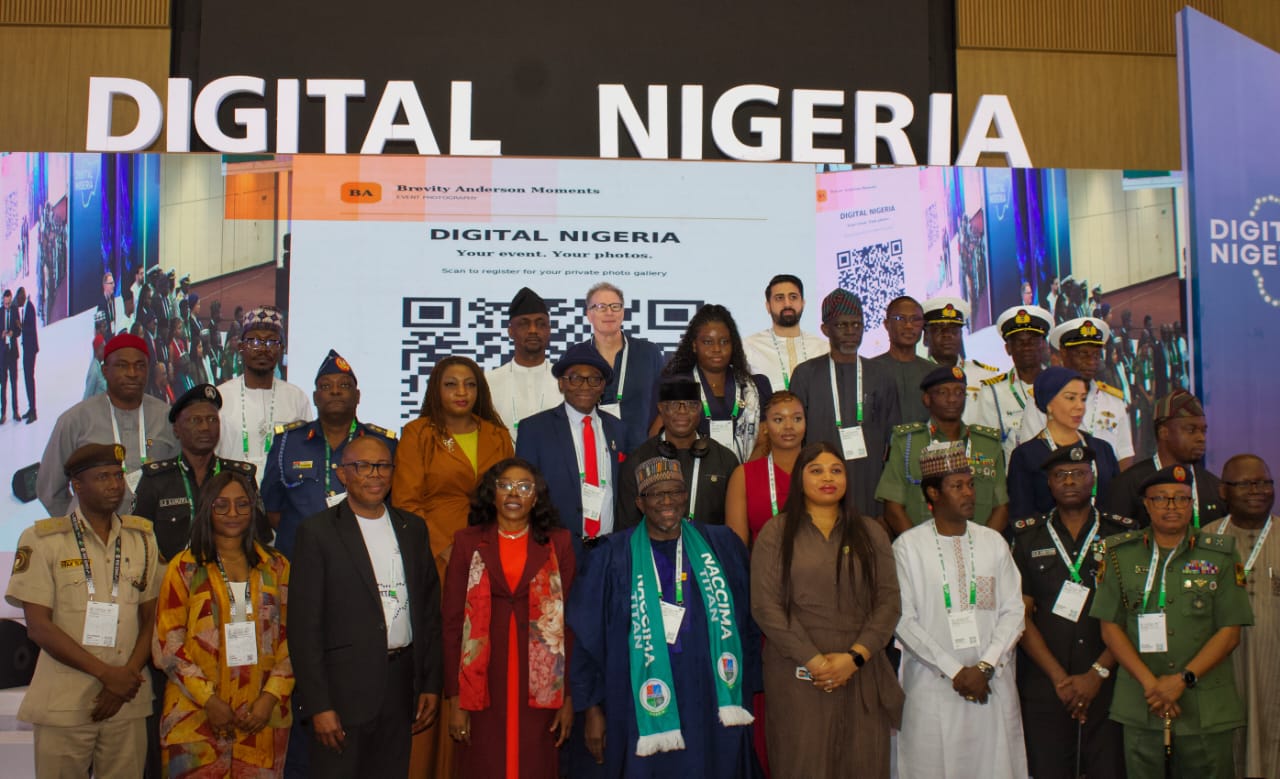
The target was announced at the Digital Nigeria International Conference, Exhibition and Awards (DNICE) 2026, held at the Bola Ahmed Tinubu International Conference Centre in Abuja. NITDA hosted the event, and Brevity Anderson produced it. Its theme is “Driving Nigeria’s Digital Future: Secure, Intelligent and Inclusive Systems.”
Related news
Why some Buhari cabinet members reviled Pantami – Fashola
Insecurity: FG, China to collaborate on technology transfer, intelligence sharing
Phone interception claim: DSS to arraign el-Rufai in court Feb 25
The conference was declared open by the National President of the Nigerian Association of Chambers of Commerce, Industry, Mines and Agriculture (NACCIMA), Engr. (Dr.) Jani Ibrahim, in his keynote address.
Conversation Must Convert
The NITDA Director-General, Kashifu Inuwa Abdullahi, was represented by the agency’s Director of Special Duties, Office of the Director-General, Dr Aristotle Onumo.
Onumo said the conference was built to turn policy discussion into investment, jobs and better public services, and not to end in speeches and networking.
“Talk must turn to pilots, pilots must turn into contracts, and contracts must turn into jobs, revenue and better public service for Nigeria,” he said.
He said this year’s edition rests on four pillars: the Builders’ Festival, the main conference, practical masterclasses and the Nigeria Digital Honours Award.
Builders’ Festival: Starting With Problems, Not Pitches
The Builders’ Festival brings together government institutions, corporations and startups to solve identified operational challenges. Onumo said NITDA began by asking ministries, financial institutions and companies to name their problems, and only then matched them with start-ups holding ready-to-deploy solutions.
“We did not start by asking startups for their ideas. We started by asking institutions for problems,” he said.
More than 100 verified challenges have been collected across fintech, healthcare, education, logistics, digital identity, agriculture, telecommunications infrastructure and artificial intelligence. Over the three days, startups will meet the institutions concerned for demonstrations, negotiations and the signing of memoranda of understanding.
“Our target is to unlock a pipeline investment of N3 billion, and I believe it is possible,” Onumo said.
He added that start-ups need customers as much as capital. “The biggest customers in any economy are the institutions,” he said. When government bodies buy Nigerian solutions, he argued, they also strengthen local businesses, keep skilled people in the country and keep economic value at home.
A Fast-Growing Digital Economy
Onumo cited figures showing the scale of growth: Broadband penetration reached 57.4 per cent in July 2026, up from about 48.8 per cent in August 2025. Nigeria now has about 120 million broadband connections and more than 157 million internet subscribers.
Data consumption hit 1.66 million terabytes in July, almost 50 per cent higher than a year earlier. Telecommunications and information services contributed more than N5.2 trillion to GDP in the second quarter of 2026.
“Digital economy is no longer a sector in Nigeria’s economy. It is Nigeria’s economy,” he said.
He acknowledged that gaps remain in digital literacy, infrastructure and technical manpower, and said the conference would review progress toward developing three million technical talents. He called for closer collaboration among government, industry, academia and development partners.
The main conference will take up artificial intelligence sovereignty, digital infrastructure financing, cybersecurity, data protection and digital inclusion. The masterclasses will cover product development, marketing, project management and technology development.
Onumo described the event as “not a talk show, but a work show.” The Nigeria Digital Honours Award will recognise individuals and organisations across eight categories, including AI innovation, startups, digital infrastructure, digital government, digital inclusion and digital skills.
Private Sector Backs the Plan
Ibrahim said Nigeria’s $1 trillion ambition will be hard to reach without deliberate integration of technology, enterprise and investment, and that organised private business is ready to connect innovators with manufacturers, farmers, traders, miners and exporters.
He noted that Nigeria’s nearly 40 million micro, small and medium enterprises account for about 46 per cent of GDP and close to 88 per cent of employment.
“Transform only large corporations and we create only islands of excellence. But transform millions of MSMEs and we change the productivity curve of the entire economy,” he said.
He described the NITDA-NACCIMA partnership as a bridge between technology providers and businesses, with three priorities: business-to-business deal rooms and commercial offtake, a 10,000 AI Enterprise Accelerator, and the promotion of digital trust.
The accelerator would help firms use AI for demand forecasting, equipment maintenance, agricultural data analysis, bookkeeping and marketing.
Ibrahim urged corporate organisations and investors to back local innovators. “Do not merely admire Nigerian innovation. Please buy it, and not only do that, fund it,” he said. On security, he said: “Digital growth without digital trust is fragile growth.”
He called for women-owned businesses, rural enterprises, young entrepreneurs and persons with disabilities to be included, and said the conference should be judged by startups funded, pilots commissioned, purchase orders issued, businesses upgraded and jobs created. He also said he had recently returned from a business forum in Guangzhou, China, where more than 200 Chinese investors showed interest in investing in Nigeria.
Agencies and Security Institutions at the Table
Several federal bodies took part, some through representatives: The Nigerian Communications Commission (NCC), represented on behalf of its Executive Vice Chairman and Chief Executive Officer, Dr Aminu Maida.
The Nigeria Data Protection Commission
The Nigeria Immigration Service, represented on behalf of the Comptroller-General
The Federal Character Commission, represented on behalf of its Chairman
The Nigerian Financial Intelligence Unit (NFIU), represented on behalf of its Chief Executive Officer, Hafsat Abubakar Bakari.
The National Identity Management Commission (NIMC) was represented on behalf of its Director-General, Engr. Abisoye Coker-Odusote, by its Director of Operations, Dr Uche Chugbo. He praised the conference theme as timely and said a universally accessible digital identity system is critical to access to public and private services.
NIMC pledged closer work with NITDA on digital public infrastructure, identity, data interoperability and cybersecurity.
The military was also represented. Major General Emmanuel Soledayo Mustapha, Commander of the Nigerian Army Cyber Warfare Command, attended on behalf of the Chief of Army Staff, Lieutenant General Waidi Shaibu.
In his speech, Major General Mustapha said: “Modern military warfare is technology driven.”
Among the other attendees were officers from the Army, Navy and Air Force, the Defence Intelligence Agency, the Office of the National Security Adviser (ONSA) and the Nigeria Police, along with federal and state policymakers, financial sector leaders, investors, captains of industry, academics, researchers, NGOs, international technology leaders, the press and young Nigerians.
Themes on the Programme
Organisers say the programme covers the technologies expected to shape the next phase of growth:
AI and agentic AI: systems that carry out multi-step tasks with some independence, and how Nigerian organisations can move from experiments to responsible, profitable use.
Cybersecurity and digital trust: protecting money, records and identities as more activity moves online, including data governance and personal data protection.
Cloud and data centres: the infrastructure behind digital services, including connectivity, local data hosting and enterprise cloud.
Digital public infrastructure: trusted digital identity, interoperable payments, secure data exchange and accessible government services.
FinTech, EdTech, HealthTech and AgTech: how pilots can grow into wider adoption.
The conference is expected to strengthen collaboration among government, business, investors, innovators and development partners toward a secure, intelligent, inclusive and productive digital ecosystem.
Production and Delivery
Brevity Anderson produced the event, handling planning, stakeholder coordination, programme development, communications and partnership management, working alongside NITDA.