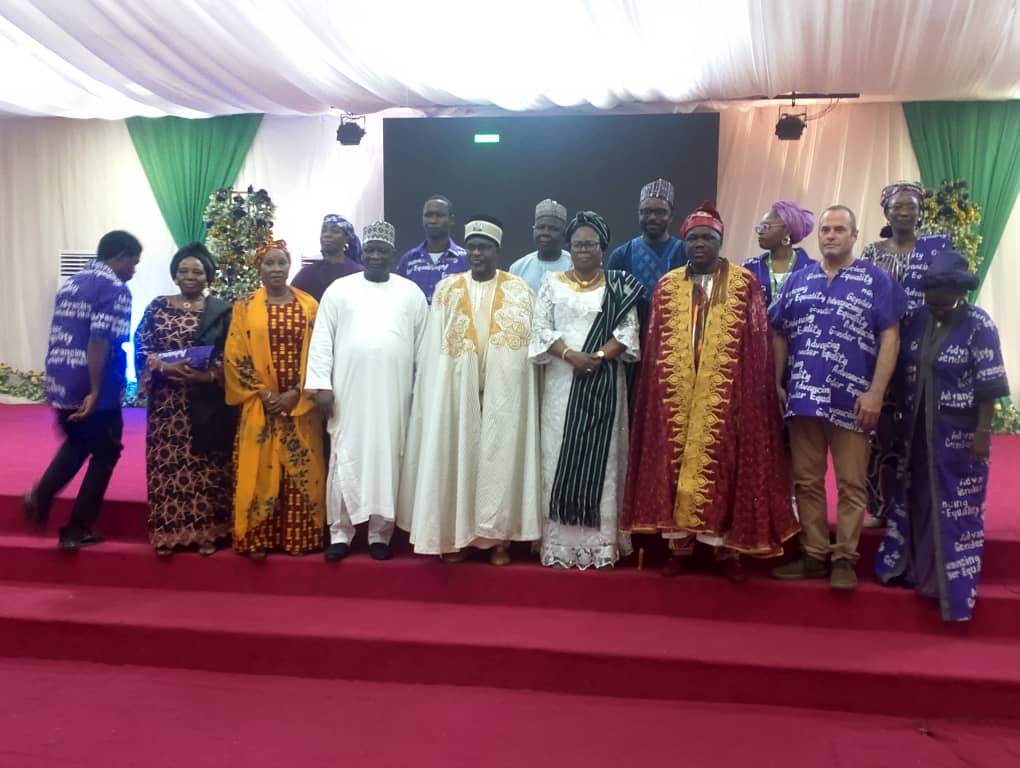

Stakeholders commend Oxfam, partners over success of WoRGE project at closing ceremony
Critical stakeholders in Adamawa State have commended Oxfam and its partners for the positive impact of the Women’s Rights and Gender Equality (WoRGE) Project, which has contributed significantly to the well being and livelihood of vulnerable population in the state.
The stakeholders including traditional leaders, women and People Living With Disability amongst others noted that the 18 month project has lifted a number of beneficiaries out of abject poverty, improved living standards and foster awareness around gender-based issues, such as Gender Based Violence (GBV) and promoting gender equality in conflict-affected communities.
Related news
inequality Report: Three men wealthier than 83m others in Nigerians – Oxfam
Child rights in focus as APHCDA, women affairs min., Adamawa poly enter pact
Femicide: 50 women killed in Nigeria in 3 months
The 18-month programme, which began in December 2023, was implemented in Michika and Guyuk Local Government Areas with the support of the German Federal Ministry for Economic Cooperation and Development (BMZ), GIZ, German Cooperation, and co-funded by the European Union.
Speaking at the project valedictory event in Yola on Monday, women leaders from Michika and Guyuk, Mrs. Regina Elson and Mrs. Rose Russia respectively, expressed heartfelt appreciation for the initiative.
They highlighted how the programme has transformed perceptions in their communities by breaking long-standing cultural and religious barriers that previously suppressed women’s rights and participation in leadership and decision-making.
According to them, before the arrival of Oxfam and its partners, many women were unaware of their rights due to restrictive traditional and religious norms that falsely confined leadership roles and public engagement to men.
Through the WoRGE Project’s targeted sensitization and training sessions, women were empowered with knowledge about their rights, responsibilities, and the importance of gender equity in building peaceful and prosperous communities.
Similarly His Royal Majesty Kwandi Nunguraya, Dr. Dishon Dansanda II and Mbege Ka Michika, HRM Prof. Bulus Luka Gadiga respectively all hail the project for the superlative role it plays in bringing succor to many families, fosters communal understanding and harmony and engender the spirit of resilience and hard work amongst the people.
“I must thank Oxfam for establishing solid footprints all over my kingdom. You have empowered numerous women in leadership, and brought out the best in them,” he said.
Also pouring accolades on Oxfam and partners Mbege Ka Michika said any society which neglect women will remain a perpetually backward society.
“What Oxfam has done aligns with my resolve as an advocate of gender equality. No society can leave in peace without the positive contributions of women. We must continue to empower and uplift our women for peace and harmony to prevail,” he added.
In his opening remarks, Oxfam Country Director Daniel McCornmick praised the efforts of all stakeholders in making the WoRGE Project a success. He emphasized the project’s role in advancing women’s rights using conflict-sensitive and inclusive approaches.
“This collective presence highlights the importance of institutionalizing gender-responsive governance that prioritizes the voices and needs of the most marginalized—particularly women, girls, and displaced communities,” he said.
McCornmick noted that the project was designed not only to address GBV but also to promote the social and economic participation of returnees, internally displaced persons, and vulnerable members of host communities. With the active involvement of partners like CRUDAN and CEPAD, and the support of local and state government actors, the project brought about meaningful change at the grassroots level.
Through the WoRGE Project, Oxfam and its partners adopted a gender-transformative and participatory model that challenged harmful norms and empowered women to take leadership roles in their families and communities. Participants were encouraged to identify gender-based barriers, define their personal goals, and implement action plans toward self-reliance and equality in domestic responsibilities.
A major achievement of the project was the establishment of 13 safe spaces for women across Michika and Guyuk, where participants freely discussed issues affecting them, shared experiences, and gained peer support. These spaces became platforms for empowerment, collective action, and capacity building.
The project also led to a notable increase in female representation in traditional and community leadership structures. Thanks to sustained advocacy and leadership training, three women and three persons with disabilities were included in local traditional councils, leading to a 55% rise in women’s representation in leadership across the two LGAs.
“The project successfully enhanced confidence, leadership skills, and decision-making power among women,” McCormick added. “It is a testament to what can be achieved when local communities, development partners, and government institutions work together to create a more inclusive and equitable society.”
As the WoRGE Project concludes, its legacy remains in the lives it has touched—women who now stand stronger, speak louder, and lead with confidence in their communities.