
Democracy Day: Abbati hails Tinubu’s reforms, advocates rural wealth creation strategy
By Mohammed Ismail
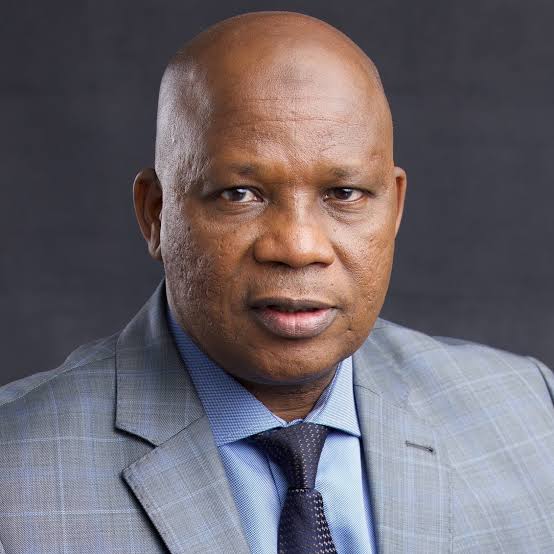
Former Managing Director of the Nigeria Incentive-Based Risk Sharing System for Agricultural Lending (NIRSAL) and APC senatorial aspirant for Adamawa Central, Aliyu Abdulhameed Abbati mni, has defended the economic reforms introduced by President Bola Ahmed Tinubu, describing them as strategic measures aimed at repositioning Nigeria’s economy along a private sector-driven growth trajectory.
Why Adamawa Central deserves Abbati’s strong representation
Tinubu’s economic reforms superb, must be sustained for sustainable growth – Aliyu Abdulhameed
CBN gov explains why apex bank keeps jerking up interest rate
Speaking during a Democracy Day interview, Abbati, a distinguished Nigerian agricultural scientist and policy strategist argued that while the administration’s reforms have generated short-term hardships, they represent a deliberate effort to create a more productive economy capable of generating sustainable wealth and reducing dependence on government subsidies.
According to him, the Tinubu administration has fundamentally altered the structure of Nigeria’s political economy by prioritizing policies that encourage enterprise development across all levels of economic activity, from micro and small businesses to large-scale industries.
”From the day the President announced the removal of fuel subsidy, the policy direction has consistently been about enabling businesses to thrive and creating opportunities for individuals to build wealth through productive engagement,” he stated.
Abbati maintained that the administration’s economic agenda should be viewed as a “glass half full” rather than a failed experiment, noting that critics often focus exclusively on the challenges while overlooking the opportunities created by the reforms.
The former NIRSAL boss, however, acknowledged the existence of a disconnect between government policies and public participation, stressing that many Nigerians are yet to fully understand how to position themselves to benefit from the emerging economic framework.
He argued that government must intensify efforts to provide support mechanisms that would help citizens, particularly those in rural communities, integrate into the broader economic transformation agenda.
Responding to concerns raised by international development institutions regarding rising poverty levels in Nigeria, Abbati cautioned against accepting external assessments without a deeper examination of the underlying economic variables.
He questioned the tendency to attribute worsening poverty indicators solely to government reforms, insisting that economic outcomes are influenced by multiple factors and should be evaluated sector by sector.
”An economy is composed of many moving parts. Before labeling a policy as harsh, we must identify the specific sectors affected and balance that assessment against the areas where wealth creation and business expansion are occurring,” he said.
On the controversial fuel subsidy removal policy, Abbati described the decision as economically inevitable, arguing that successive administrations had grappled with the sustainability of subsidizing consumption rather than production.
While conceding that the abrupt implementation contributed to inflationary pressures, he emphasized that the more critical issue is not the removal itself but the adequacy of accompanying social and economic cushioning measures.
”The debate should not be whether subsidy should have been removed. The real question is whether the consequences have been managed effectively and whether sufficient support systems were put in place for vulnerable populations,” he noted.
Drawing extensively from his agricultural development experience, Abbati proposed a production-focused intervention model targeted at rural communities, which he described as the fastest route to poverty reduction and economic inclusion.
He observed that over 90 percent of Nigeria’s rural economy is linked directly or indirectly to agriculture, making the sector a strategic platform for broad-based wealth creation.
According to him, rather than subsidizing fuel consumption, government should channel resources toward reducing farmers’ production costs through subsidized fertilizer, improved seed distribution, mechanization support and affordable irrigation systems.
He argued that lowering production costs would significantly increase farmers’ profit margins, thereby boosting disposable incomes, improving household welfare and stimulating local economic activities.
Abbati further advocated for community-based agricultural clusters supported by solar-powered irrigation, local processing facilities and structured market linkages.
Using Namtari District in Adamawa State as a hypothetical example, he explained that targeted interventions could transform entire rural communities into productive economic hubs within a single farming season.
The APC stalwart expressed confidence that President Tinubu would secure a second term, adding that the administration’s prospects would be significantly strengthened if it complements its microeconomic reforms with grassroots-focused policies capable of delivering immediate improvements in the livelihoods of ordinary Nigerians.
He noted that sustainable prosperity would emerge not from direct cash transfers but from empowering citizens with the tools, infrastructure and opportunities required to become active participants in the nation’s productive economy.