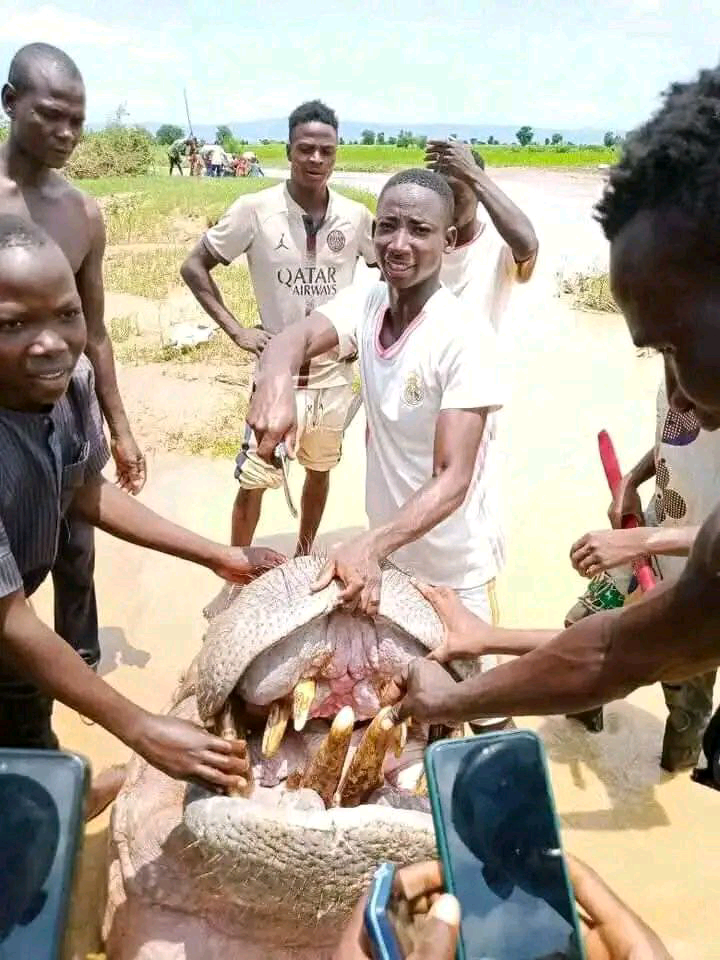

Locals kill deadly hippo after fatal attack in Adamawa
Residents of Banjiram, a sleepy agrarian community in Guyuk local government area of Adamawa State have over the weekend killed a rampaging hippo believed to have killed a young man in the area.
Locals have earlier issued a distressed call to authorities calling on them to tame the wild animal which has gone gaga destroying farmlands and threatening the lives of residents.
Related news
Yola flood: Fintiri confirms 23 deaths, vows govt support as rescue efforts continue
Adamawa govt hits Atiku over comments on flood disaster
Haske commiserates with Yola flood victims, urges swift govt response
According to local, the animal had become increasingly aggressive after being displaced from its natural habitat near Kiri Dam due to heavy rains and severe flooding.
“The animal was invading farmlands, riverbanks, and even flooded homes. It posed a serious threat to both lives and livelihoods. Apart from killing one of our youths, it was destroying crops and scaring residents and livestock away from water sources,” locals have disclosed.
Despite laws prohibiting the killing of protected wildlife such as hippopotami, classified globally as endangered species, locals driven by fear and survival instincts, took matters into their own hands.
In a coordinated effort, local hunters and community members tracked and killed the rogue hippo, ending what many described as a deadly rampage.
Reports indicated that the animal’s remains has since been dismembered and the meat shared among residents in a spasmodic moment of relish and consumed as a sumptuous delicacy.
When asked why they took matters into their hands considering the status of hippos as endangered species, residents said they resorted to killing the animal following government’s lethargy to promptly respond to their cries for help.
“We understand the laws, but human lives must come first. No one came to help us. If we hadn’t acted, more people might have died.” a resident Bulus Samson told our reporter.
Wildlife experts have raised alarms that indiscriminate killings of such treasured and endangered animals could threaten the ecological balance, especially around the Kiri Dam, which is home to an estimated 200 hippo population.
They underscored the urgent need for government intervention noting that continued displacement of hippos and other wild animals could tilt the balance of nature.
According to a wild life conservationist, Pallam Dominic, the situation calls for urgent action.
“The Ministry of Environment must work with local communities to develop a sustainable strategy that ensures human safety without violating wildlife protection laws,” he said.
He called on Adamawa State Ministry of Environment and emergency response agencies to intervene and implement long-term solutions to prevent future tragedies.
Dominic suggested the creation of buffer zones around water bodies, improved flood control, and the establishment of rapid response units to handle wildlife threats.