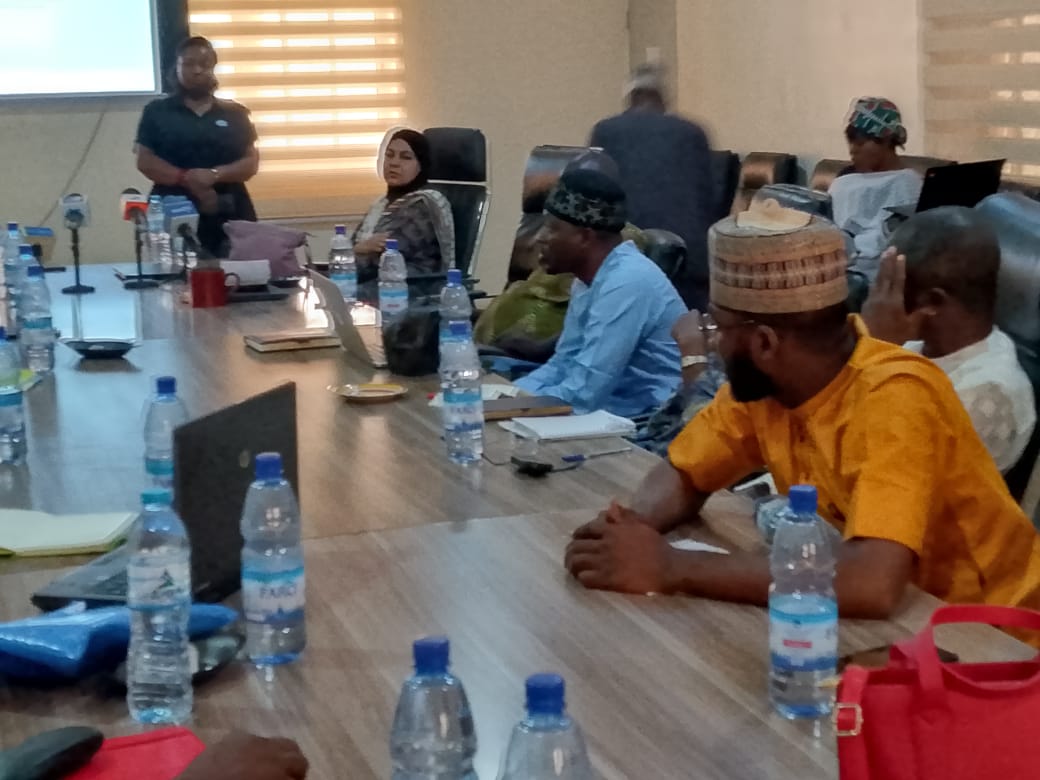

Stakeholders push for solid investment in children’s first 1,000 days at Yola dialogue
Stakeholders including Health experts, state actors and development partners have intensified calls for deliberate investment in integrated services for children in their first 1,000 days during a dialogue in Yola, the capital of Adamawa State.
They noted that failure to act carries grave consequences for the state and nation’s economy and long-term development.
Related news
Journalists pledge enhanced advocacy towards ensuring healthy first 1000 days of child’s life
Two more Adamawa LGs to be free from open defecation as UNICEF unveils DGIS – ASWA III
Adamawa-Born Doctor Makes History with West Africa’s First Robotic Surgery for Fibroid Treatment
The media dialogue was organized by the Bauchi Radio Corporation in collaboration with UNICEF Bauchi field office in Yola, Adamawa State.
The event brought together health professionals, development partners and journalists to spotlight the urgency of prioritizing maternal and child health interventions within this critical window of life.
Dr. Takwale Joseph Vawa, Maternal Perinatal Child Death Surveillance and Response (MPCDSR) Desk Officer, described the first 1,000 days as the foundation upon which a child’s physical growth, brain development and future productivity are built.
“Failure to invest in the first 1,000 days comes with grave future consequences,” he warned.
Dr. Vawa explained that about 45 percent of under-five deaths in many underdeveloped countries are linked to malnutrition adding that children who survive poor nutrition and inadequate healthcare during this period often grow up with developmental deficits that limit their productivity in adulthood.
He connected early childhood investment directly to national economic performance, citing the Human Capital Index (HCI), which measures the expected productivity of a newborn at adulthood.
He said countries that prioritize maternal health, nutrition, immunization and early stimulation record higher HCI scores and greater prosperity, while those that neglect these areas remain trapped in cycles of poverty , low productivity and crimes.
He said when the immunity of a child is weak, he becomes a candidate for diseases adding that any breach within this window leads to compromised results.
He stressed that deficits acquired early in life often translate into reduced educational attainment, lower income and heightened vulnerability to crime and social instability.
Dr. Vawa emphasized that investment in the first 1,000 days yields enormous economic returns, estimating that for every dollar invested, there is a minimum return of 16 dollars.
He said the importance of such investment does not only translate to better health and reduced mortality rates but to better national economy and prosperous future.
Complementing this perspective, Nanbam Dawap, WASH Officer with UNICEF, underscored the importance of integrating Water, Sanitation and Hygiene (WASH) services into maternal and child health programs.
“We cannot achieve universal health coverage without embedding WASH components,” she said.
Dawap explained that lack of access to clean water, functional toilets and proper hygiene practices significantly increases children’s susceptibility to infections, thereby imposing avoidable economic burdens on families.
She highlighted simple but effective measures such as hand washing with soap after using the toilet, before breastfeeding, before preparing food and before eating noting that these practices, will go a long way in reducing infection rates by up to 50 percent.
She called on stakeholders to conduct sanitation assessments in communities and ensure that WASH indicators are fully integrated into programs targeting the first 1,000 days.
In her keynote remarks, Dr. Nuzhat Rafique, Chief of UNICEF Bauchi Field Office, reaffirmed the agency’s commitment to invest in integrated services that support children and mothers during this critical period.
She said UNICEF is strengthening antenatal and neonatal care, promoting exclusive breastfeeding, supporting proper nutrition, expanding immunization coverage and improving sanitation services.
According to her, the goal is not merely to ensure child survival but to safeguard lifelong wellbeing and productivity.