Nafiu Bala: The Gombe politician who stealthily rocks Nigeria’s opposition establishment
By Mohammed Ismail
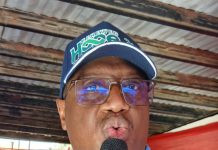
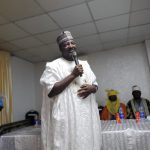
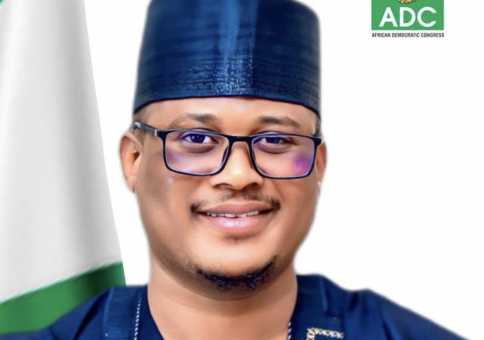
Nigeria’s opposition politics has been thrown into fresh turmoil following an escalating leadership battle within the African Democratic Congress (ADC), with a relatively little-known politician from Gombe State, Hon. Nafiu Bala Gombe, emerging as a major challenger to some of the country’s most influential political figures.
Bala, whose insistence on becoming the party’s National Chairman has unsettled the political calculations of former Senate President David Mark and former Vice-President Atiku Abubakar, has suddenly become a central figure in the struggle for control of the ADC ahead of the 2027 general elections.
Related news
We’re waiting for CTC to make our position known: INEC breaks silence on ADC judgement
Court sacks Mark-led ADC leadership, nullifies all party’s candidates
What started as a disagreement over the succession of the party’s former National Chairman, Ralph Nwosu, has developed into a protracted legal battle with potentially far-reaching consequences for the opposition coalition and its presidential ambitions.
Bala’s background and political evolution
Born on June 6, 1986, in Nassarawo Ward, Gombe Local Government Area of Gombe State, Bala attended Nassarawo Primary and Junior Secondary School before proceeding to Government Day Technical College (Vocational), Gombe, where he obtained his Senior Secondary School Certificate in 2010.
He later attended AD Rufai College for Legal and Islamic Studies, Misau, Bauchi State, graduating with a Diploma in Law in 2012. Before venturing into partisan politics, Bala reportedly volunteered with private law firms in Gombe.
His political journey began with the defunct Democratic Peoples Party (DPP), established by former Sokoto State Governor, Attahiru Dalhatu Bafarawa. He subsequently joined the People’s Redemption Party (PRP) before moving to the ADC, where he eventually rose to become Deputy National Chairman representing the North-East.
His political profile gained wider recognition in 2023 when he contested the Gombe State governorship election on the ADC platform against incumbent Governor Muhammadu Inuwa Yahaya of the All Progressives Congress (APC).
After losing the election, Bala challenged the outcome before the election petition tribunal and pursued the case through the appellate courts up to the Supreme Court, where he eventually lost.
An ADC chieftain in Gombe, Mustapha Hadi, told this newspaper that the prolonged legal battle helped raise Bala’s political profile and strengthen his visibility within the party’s national structure.
A relative, who requested anonymity, described him as a politician from a humble background whose profile and lifestyle reportedly changed after the 2023 election.
The relative alleged that Bala subsequently relocated his wife to Kaduna while retaining his residence in Abuja. He also recalled that the politician visited Gombe during the recent Sallah celebration with a convoy of SUVs and security escorts, reflecting his growing political influence.
How the ADC crisis erupted
The present leadership controversy followed the resignation of Ralph Nwosu as ADC National Chairman and the subsequent move by the opposition coalition led by David Mark to establish a new leadership structure within the party.
Bala, who was then the party’s Deputy National Chairman for the North-East, rejected the arrangement, arguing that the ADC constitution entitled him to assume leadership following Nwosu’s departure.
He maintained that the emergence of Mark as National Chairman and former Minister of Interior, Rauf Aregbesola, as National Secretary was unconstitutional and violated relevant provisions of the Electoral Act.
Bala also dismissed allegations that his faction was being sponsored by elements within the ruling APC to destabilise the opposition coalition.
Insisting that his position was rooted in the party’s constitution rather than personal animosity towards the coalition leaders, he said he had been a committed ADC member for about 10 years.
“We are not saying we don’t like David Mark. We are not saying we are not going to work with them. But we are telling them, the process, the way, they entered the party is faulty,” he said.
Mark, however, presented a different account of the dispute, claiming that Bala had resigned as Deputy National Chairman on May 17, 2025, with his resignation subsequently transmitted to INEC on August 12, 2025.
The former Senate President questioned why Bala would approach the court months later seeking recognition as acting National Chairman after allegedly relinquishing the position on which his claim was based.
The legal battle that changed everything
On September 2, 2025, Bala instituted Suit No. FHC/ABJ/CS/1819/2025 at the Federal High Court in Abuja, seeking to restrain Mark and members of his faction from presenting themselves as ADC leaders.
He also sought an order stopping INEC from recognising the disputed leadership and compelling the commission to recognise him as acting National Chairman.
The case triggered further legal manoeuvres, including an appeal by Mark challenging the jurisdiction of the Federal High Court.
On March 12, 2026, the Court of Appeal dismissed Mark’s appeal, describing it as incompetent and unmeritorious.
The controversy deepened on April 1, 2026, when INEC announced its decision to withdraw recognition from both the Mark-led and Bala-led factions, citing its interpretation of the appellate court’s ruling.
The Mark-led faction rejected the commission’s position, alleging that INEC was acting under external pressure.
However, the latest Federal High Court judgment delivered by Justice Peter Lifu in Abuja has significantly altered the political and legal equation.
The court nullified the Mark-led ADC leadership, declaring that the process through which the caretaker committee emerged violated the party’s constitution, relevant provisions of the Electoral Act and the 1999 Constitution.
The ruling also invalidated decisions taken under the disputed leadership, including the presidential primary that produced Atiku Abubakar as the party’s candidate for the 2027 general elections.
Other decisions affected include Aregbesola’s emergence as National Secretary, the appointments of other national officers and the nominations of candidates presented by the party for the forthcoming elections.
The court further directed INEC not to recognise or act on decisions taken at the ADC’s 99th National Executive Committee meeting held on July 27, 2025.
Bala celebrates legal victory
Reacting to the judgment, Bala praised the Federal High Court for what he described as an independent, impartial and courageous determination of the dispute.
In a statement issued on Thursday, he commended Justice Lifu for deciding the matter on the basis of constitutional and statutory provisions rather than political considerations.
He described the ruling as a significant development for Nigeria’s democracy, insisting that political parties must operate within the confines of their constitutions and the Electoral Act.
According to him, the judgment reinforces the principle that political leadership must emerge through lawful procedures rather than political imposition.
Bala also argued that judicial intervention becomes necessary when political parties disregard their internal rules, adding that the decision would strengthen public confidence in the judiciary.
He commended his legal team for their commitment throughout the proceedings and thanked supporters across the country for their solidarity, loyalty and prayers.
A bigger headache for the opposition coalition?
The implications of the unfolding crisis extend beyond the contest between Bala and Mark. For the opposition coalition, the judgment represents a major setback to the leadership arrangement painstakingly assembled around the former Senate President.
For Atiku Abubakar, the invalidation of the presidential primary that produced him as the coalition-backed ADC candidate introduces fresh uncertainty into his 2027 presidential ambition.
The development also raises questions about the status of other candidates nominated under the disputed leadership and the party’s preparedness for the forthcoming elections.
INEC has meanwhile indicated that it will study the certified true copy of the judgment before determining its next line of action, leaving the contending camps with further legal and political battles ahead.