
EU-SARAH: Adamawa Govt lauded for major Investment in healthcare
The Adamawa State Government has received commendation for its significant investment in healthcare, particularly in reproductive and adolescent health services. Dr. Nuzhat Rafique, Chief of Field Office for UNICEF Bauchi, praised the government’s commitment during a panel discussion in Yola, where she urged state authorities to sustain their efforts due to the long-term benefits of the initiatives.
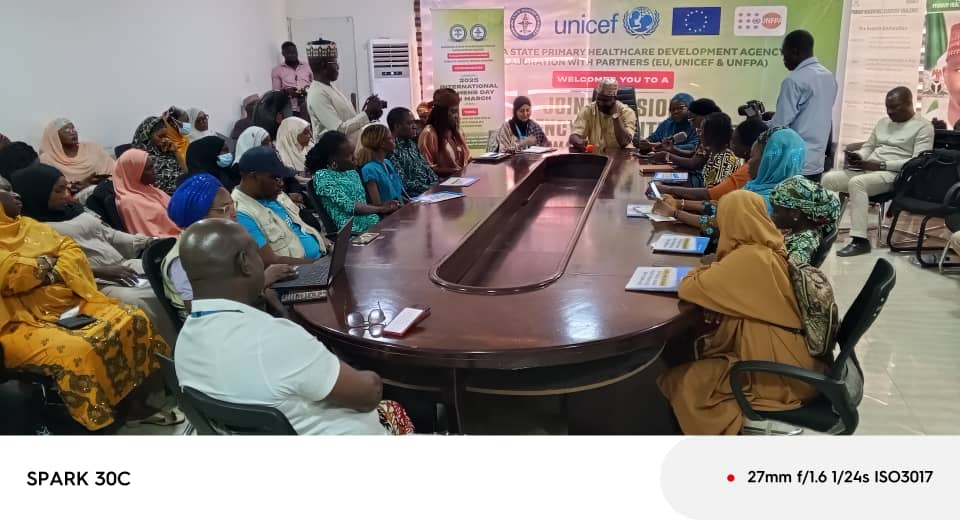
The panel discussion, organized by the Adamawa State Primary Healthcare Development Agency (APHCDA) in collaboration with UNICEF, UNFPA, and the European Union, marked an important milestone by the European Union’s Strengthening Access to Reproductive and Adolescent Health (EU-SARAH) initiative in the state. The event was part of the International Women’s Day (IWD) celebrations and aimed at raising awareness on reproductive health and other critical issues affecting adolescent girls.
Related news
UNICEF issues emergency tender to secure Mpox vaccines for crisis-hit African countries
Adamawa children advocate for gender responsive education sector, others @ 2024 children’s day
The EU-SARAH initiative, a €40 million project launched in December 2024, is a four-year program designed to improve reproductive health outcomes for women and adolescents in Nigeria. The initiative specifically targets three northern states—Adamawa, Sokoto, and Kwara—with the primary objective of enhancing data collection, analysis, and utilization to strengthen healthcare service delivery.
Dr. Rafique highlighted that the program is focused on fostering collaboration between adolescent girls and key stakeholders to ensure that young girls’ concerns are central in advocacy efforts and policymaking. These concerns include reproductive health, early marriage, nutrition, and other pressing issues affecting adolescent girls.
She emphasized the importance of improving adolescent health through proper nutrition, family support, community engagement, and open communication channels. She noted that addressing societal and cultural limitations through these measures would help bridge gaps in adolescent healthcare.
Dr. Rafique encouraged the youth in Adamawa to take advantage of resources such as social media and existing healthcare infrastructure to enhance advocacy efforts. She urged adolescents to bring their campaigns directly to policymakers to ensure timely responses to their concerns. Additionally, she advised young girls to establish community-based advocacy groups to deepen their reach and ensure the inclusion of vulnerable populations.
She also called on the government to ensure that all healthcare centers are youth-friendly, making them more accessible and welcoming to young people seeking medical and reproductive health services.
Speaking at the event, Dr. Bashir Sulaiman, Executive Chairman of APHCDA, disclosed that Adamawa State has over 1,070 primary healthcare facilities that offer adolescent-friendly health services. These services cater to young girls, individuals with disabilities, and survivors of gender-based violence (GBV).
He emphasized the need to provide adolescent girls with mental health education to prepare them for future responsibilities, particularly motherhood. According to him, equipping young girls with reproductive health knowledge allows them to educate their peers, leading to better self-care and family health.
Dr. Sulaiman noted that empowering adolescent girls with the right education and healthcare support enables them to stay in school, build careers, and contribute productively to society. “By doing this, we are ensuring that they remain in school, pursue their education, and eventually become economically productive members of the community,” he said.
Dr. Victoria Isiramen, a Mental and Newborn Health Specialist at UNICEF Abuja, stressed the importance of investing in adolescent girls, describing it as a crucial step toward achieving demographic dividends worldwide. She pointed out that Nigeria has approximately 60 million adolescent girls who need support to succeed as future change-makers.
Similarly, Rashida Tahir, Director of Community Health at APHCDA, underscored the role of adolescent girls in promoting health education among their peers and society at large. She noted that, with the support of the EU-SARAH project, community clubs led by adolescent girls have been established to improve their quality of life and health awareness.
Fact check news.
.