Before You Vote, Read This: The Record Reshaping Politics in Fufore/Song
By Dist. Ibrahim Ahijo Karlahi
In any democracy, reelection is a judgment on performance. It is the electorate’s way of asking a simple but powerful question: has this representative delivered real value? For the people of Fufore/Song Federal Constituency, the answer in the case of Hon. Aliyu Wakili Boya is both clear and compelling.
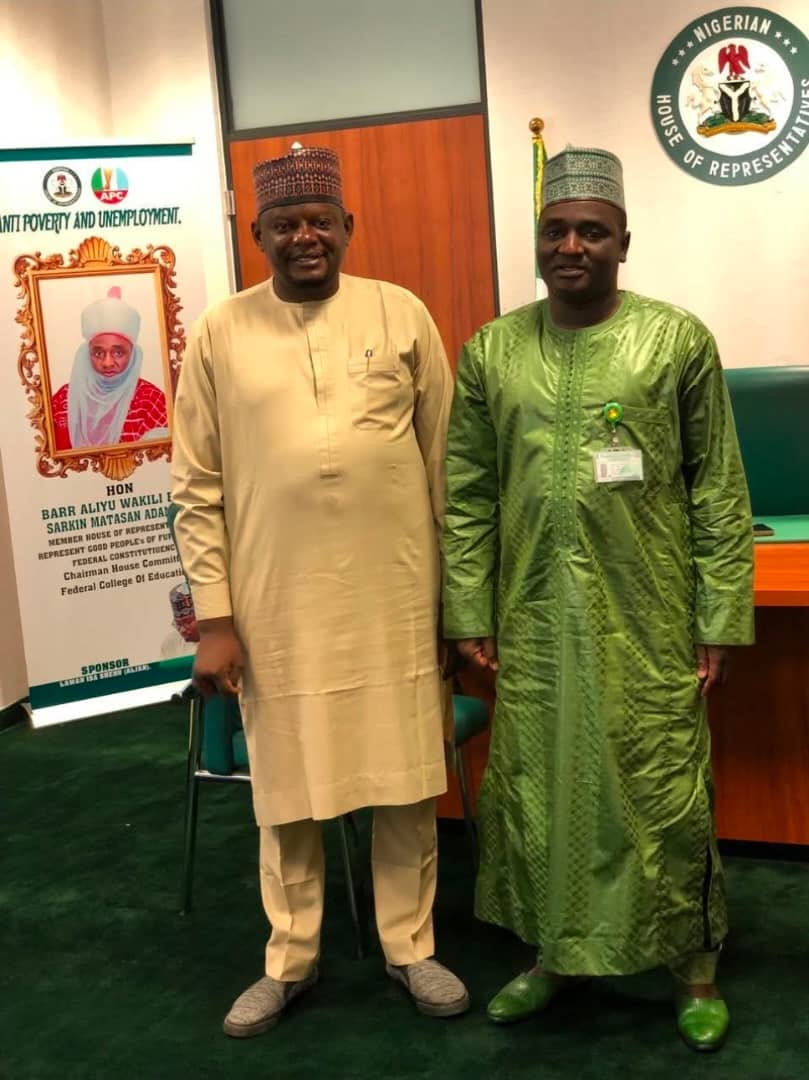
Boya has distinguished himself as a legislator who refuses to be limited by the traditional constraints of his office. Without executive control over state resources, he has built a record anchored in tangible outcomes—touching agriculture, education, healthcare, infrastructure, and human capital development. His work reflects a deep understanding that representation must translate into real improvements in people’s lives.
Related news
Resilience: Adamawa residents urge Boya to gun for Adamawa guber race
Jabbi Lamba – Malabu road: Addressing mischievous narratives against Hon. Aliyu Wakili Boya
Barr. Aliyu Wakili Boya: The man with the Midas touch, the face of our future
Beyond previously highlighted interventions, his impact extends even further. He has facilitated the recruitment of over 300 individuals into meaningful employment, both within and outside the constituency—an achievement that directly addresses one of the most pressing challenges facing young people today. His influence has also been felt in critical infrastructure, including the advancement of the Jibiro–Malabu–Sorau Road, improving connectivity and economic activity across communities.
Institutionally, his legacy is taking firm root. He played a pivotal role in the establishment of the Police College in Malabu, strengthening security capacity in the area. During his tenure as Chairman of the House Committee on Colleges of Education, he was instrumental in facilitating the Federal College of Education (Technical) in Fufore—an enduring investment in teacher training and educational development. Similarly, the College of Health Technology in Song stands as a strategic contribution to strengthening the local healthcare workforce.
These are not isolated projects; they represent a coherent vision—one that links education, security, infrastructure, and economic empowerment into a broader development framework. This is what effective representation looks like: not noise, but structure; not promises, but progress.
Reelecting Boya is therefore a decision about continuity. Development gains of this scale are cumulative, and disrupting such momentum risks reversing hard-earned progress. Constituencies that advance are those that recognize and sustain effective leadership, not those that recycle untested promises.
There is also a wider implication. When voters reward competence and delivery, they reshape political incentives. They send a clear message that performance—not patronage or rhetoric—is the standard for public office. In doing so, they contribute to strengthening democratic accountability far beyond their immediate constituency.
Hon. Aliyu Wakili Boya has treated public office as a platform for service, not privilege. He has shown that even within the legislature, leadership can be proactive, people-centered, and transformative.
For Fufore/Song, the path forward is not uncertain. It is a choice between tested impact and unproven alternatives. Reelecting him is not merely an endorsement of the past—it is an investment in a future already taking shape.
Karlahi, a politician and development strategists, writes from Yola.