The North-Central question and the future of the APC ticket
By Prof. Iyorwuese Hagher
I had earlier written an article titled “The Making and Unmaking of a Vice President” in response to Dr. Reuben Abati’s thoughtful intervention, “The Importance of Kashim Shettima.” In that piece, I argued that beyond the personalities involved, the conversation before the nation was fundamentally about political balance, national cohesion, and the wisdom of sustaining arrangements that strengthen rather than strain our fragile union. I suggested that after several decades of democratic practice, Nigeria had evolved an unwritten but stabilising convention of balancing faith, region, and identity at the highest levels of political leadership. That convention, though imperfect, helped reassure diverse communities that they had a stake in the national project. My concern then, as now, was that the country must be careful not to abandon such stabilising principles without first asking whether the alternatives have truly served the national interest.
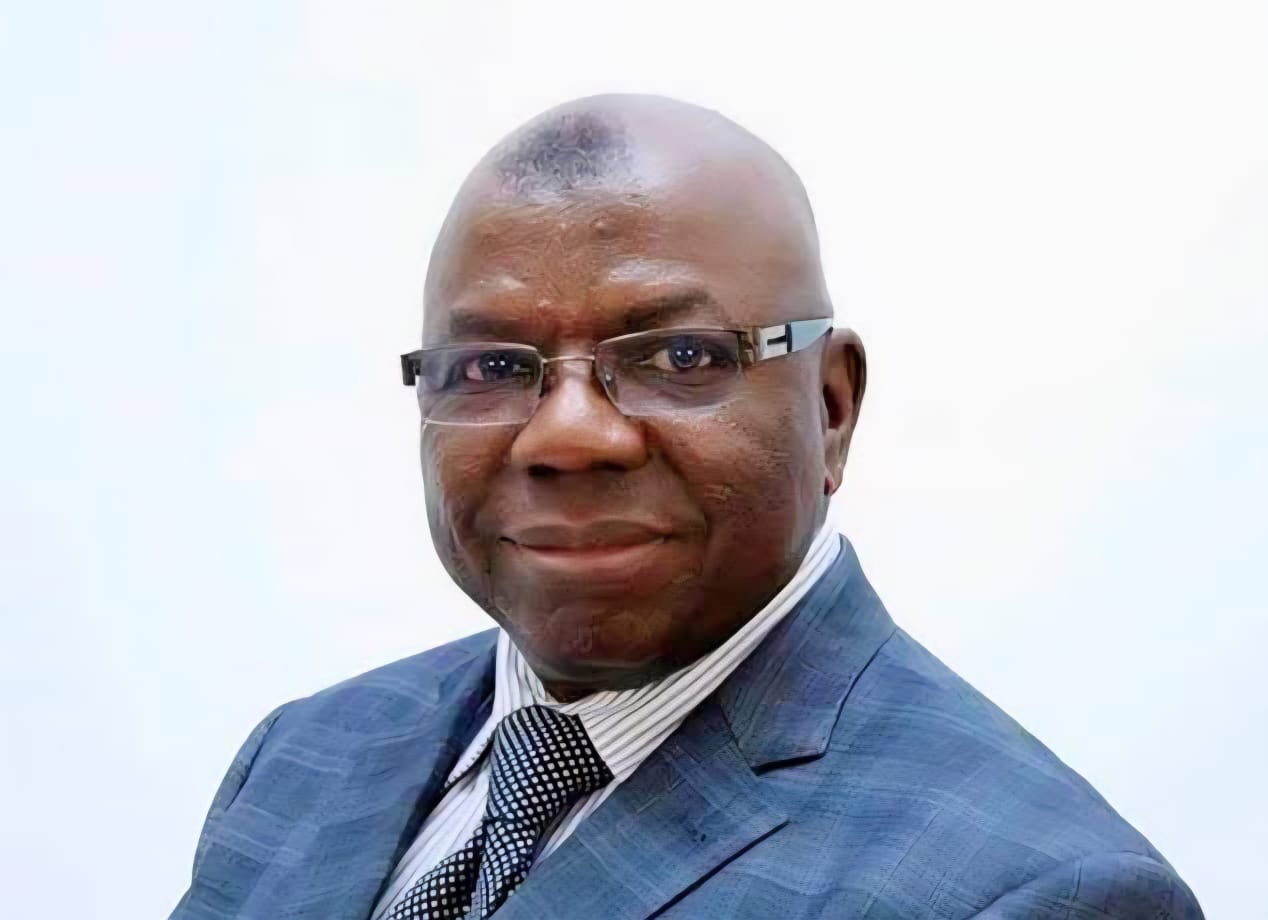
In that earlier article, I examined several names that had surfaced in public discussions regarding the future configuration of the APC ticket. Among them were Hon. Yakubu Dogara, a respected former Speaker of the House of Representatives; General Christopher Musa, a distinguished military officer and Chief of Defence Staff; and Bishop Matthew Hassan Kukah, one of the nation’s most respected moral and intellectual voices. Each possesses admirable qualities and has rendered valuable service to Nigeria in different capacities. Yet, after weighing questions of political experience, national reach, party loyalty, administrative competence, and electoral viability, I arrived at the conclusion that Senator George Akume, CON, the current Secretary to the Government of the Federation, represents perhaps the most compelling option should the ruling party decide to revisit the composition of its presidential ticket ahead of 2027.
Also read
Tinubu’s gun and the fatal ricochet of el-Rufai’s pistol
Exclusion: Dr. Bakari calls for conduct of fresh APC guber primaries in Adamawa
Recent political developments have made it necessary to return to that conversation.
President Bola Ahmed Tinubu, GCFR, has emerged as the presidential candidate of the All Progressives Congress (APC) and is yet to announce a running mate. Mr. Peter Obi, having emerged as the presidential candidate of the Nigeria Democratic Congress (NDC), has already chosen Senator Rabiu Musa Kwankwaso as his running mate, thereby immediately restoring the Christian-Muslim balance that many Nigerians have historically considered politically reassuring. Alhaji Atiku Abubakar, now flying the flag of the African Democratic Congress (ADC), is widely expected to choose a Christian running mate, most likely from either the South-West or South-East, in order to achieve both regional and religious equilibrium.
The implications of these emerging alignments cannot be ignored. They compel the APC to ask a fundamental question: what political configuration best serves both its electoral interests and the larger imperative of national unity?
The answer to that question may well lie in the North-Central.
First, political strategy demands an honest assessment of electoral realities. Alhaji Atiku Abubakar comes from the North-East and remains one of the most influential political figures ever produced by that region. His political machinery, personal networks, and historical influence within the North-East are well established. It is therefore reasonable to expect that he will command substantial support there. The region is also overwhelmingly Muslim, meaning that the APC may derive limited additional electoral advantage by merely retaining a Muslim running mate from the same geopolitical zone.
If the objective is to broaden the party’s appeal, strengthen national inclusiveness, and attract constituencies that may presently feel politically distant, then attention naturally turns to the North-Central—the most strategically balanced region in Northern Nigeria.
The North-Central occupies a unique place in Nigeria’s political architecture. Benue, Plateau, Nasarawa, Kogi, Kwara, Niger States and the Federal Capital Territory collectively represent a significant bloc of Christian voters within the North. More importantly, they embody the historical Middle Belt aspiration for inclusion, moderation, and national integration.
The APC is fortunate to possess an impressive array of leaders from this region. Senator Simon Bako Lalong, former Governor of Plateau State; Governor Abdullahi Sule of Nasarawa State; and former Governor Yahaya Bello of Kogi State have all played important roles in strengthening the party’s presence across the zone. Yet among these distinguished leaders, Senator George Akume occupies a particularly unique position.
His political story mirrors the evolution of the progressive movement itself. Long before the APC emerged as a dominant national force, Akume remained steadfast within the progressive fold. There was a period when he stood almost alone as a principal voice of opposition politics in the North, eventually becoming Senate Minority Leader. He has served as Governor, Senator, Minister, and now Secretary to the Government of the Federation. Few politicians in contemporary Nigeria possess a comparable combination of institutional memory, administrative experience, and party loyalty.
More importantly, Akume has cultivated a political temperament increasingly rare in contemporary politics. He is patient without being passive, loyal without being servile, and influential without being divisive. His strength lies not in noise but in consensus; not in confrontation but in bridge-building.
There is also the question of Benue State itself.
In the 2023 elections, at a moment when many Christian-majority states rallied overwhelmingly behind a Christian presidential candidate, Benue made a different calculation. The state gave significant support to the APC’s Muslim-Muslim ticket, placing what many considered national stability above immediate emotional considerations. That decision was neither accidental nor insignificant.
Politics, like history, has a memory.
When communities demonstrate sacrifice and loyalty during difficult moments, wise political institutions recognise such commitments. Benue’s conduct in the last election offers the APC a strategic opportunity to deepen trust and consolidate support not only within the state but across the broader Middle Belt.
Indeed, for many minority communities across Northern Nigeria, Benue remains an important political reference point. Where Benue goes, many often watch carefully and follow. This reality gives the state a strategic influence that extends beyond electoral numbers alone.
As the nation moves steadily toward 2027, every major political region appears to have secured a place at the negotiating table. The South-West holds the presidency. The South-East has produced a major presidential contender. The North-East has also produced a formidable presidential candidate. Yet the North-Central, despite its strategic importance, remains largely absent from the highest levels of the emerging political equation.
That omission deserves thoughtful reconsideration.
If the APC genuinely seeks national balance, electoral expansion, and political stability, then the North-Central must form part of its calculations. And if the North-Central is to be considered, Senator George Akume stands out as one of its most experienced, tested, and nationally acceptable sons.
Politics is ultimately about choices. Some choices divide. Others unite. Some narrow possibilities. Others expand them.
As 2027 approaches, the APC faces one such choice.
It can remain bound by old assumptions, or it can recognise the emerging realities before it. It can continue to look where it has always looked, or it can turn toward the region that may ultimately determine the difference between political comfort and political victory.
The North-Central has waited patiently. Its case is not built on entitlement but on contribution, sacrifice, loyalty, and strategic relevance.
The time has come for that case to be heard.