

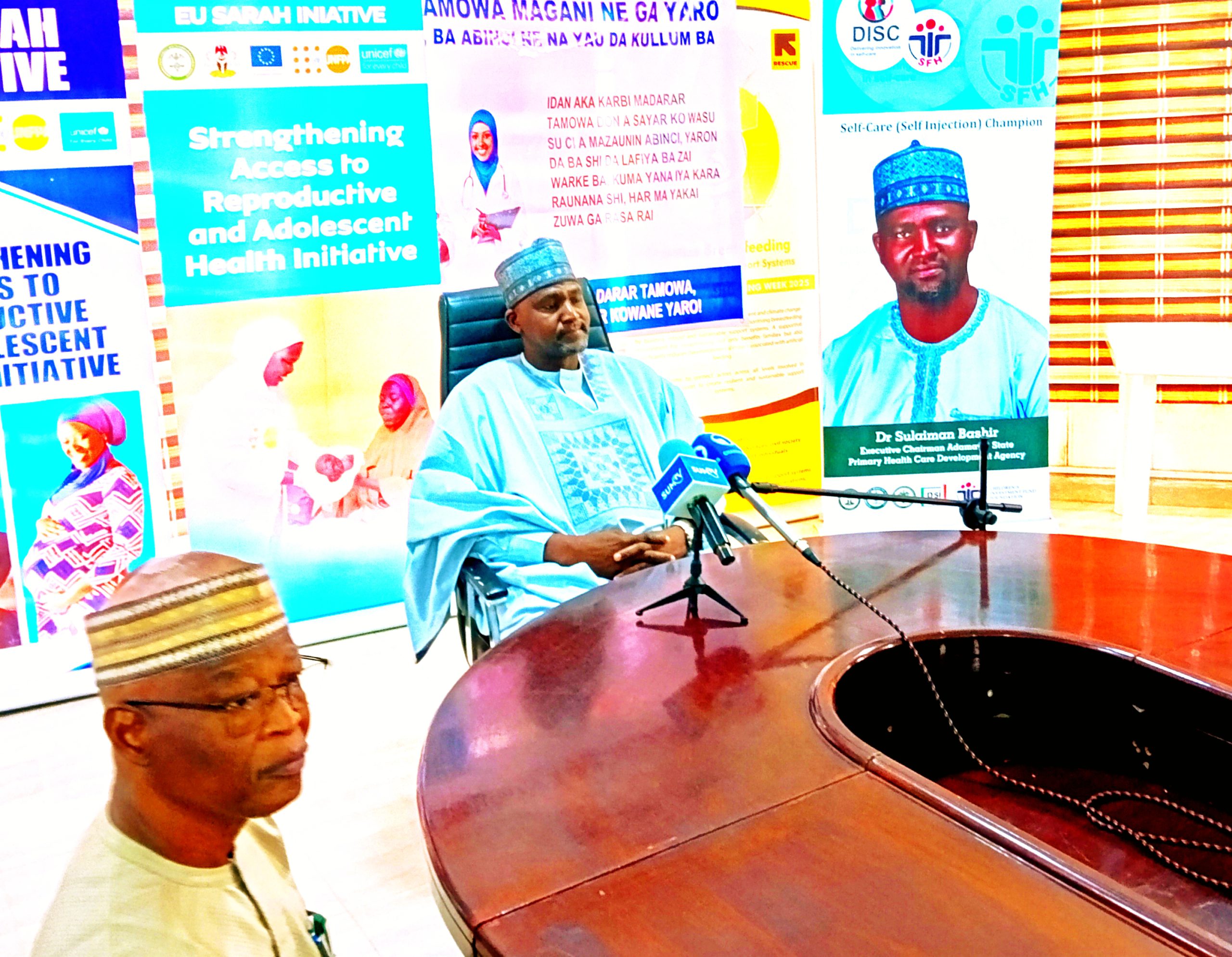

Adamawa govt strengthens confidential healthcare services for adolescents through safe spaces
By Mohammed Ismail
The Adamawa State Government, in partnership with UNICEF, is strengthening adolescent-friendly healthcare services by creating safe and confidential spaces where young people can access reproductive health information, counselling and appropriate medical care without fear of stigma or embarrassment.
The initiative is part of ongoing efforts to improve adolescent and young people’s access to healthcare services under the European Union-supported Strengthening Access to Reproductive and Adolescent Health (EU-SARAH) project, implemented with the support of UNICEF and UNFPA.
Related news
IWD: Stakeholders advocate strengthening of women’s SRH in Adamawa
Unicef, EU-SARAH initiative hands over medical equipment worth millions to Adamawa Govt
Adolescent girls in Adamawa call for more safe spaces, empowerment
At a stakeholder engagement organised by UNICEF and the Adamawa State Government with support from EU-SARAH, UNICEF Health Officer Oluseyi Olusunde said improving confidentiality was central to making healthcare facilities more responsive to the needs of adolescents.
Olusunde explained that adolescents require an environment where they can freely discuss sensitive health issues and obtain professional guidance without feeling exposed or judged.
He identified confidentiality, limited awareness of available services, parental or partner control and inconvenient opening hours as some of the challenges that can discourage young people from seeking healthcare.
However, he said the state and its partners are already responding to these concerns by establishing dedicated adolescent-friendly spaces in selected health facilities.
According to him, facilities such as Jambutu and Shagari Primary Healthcare Centres have created spaces designed specifically to make adolescents comfortable while accessing health information and services.
He said the approach goes beyond conventional clinical settings by incorporating recreational activities, including games, to create a relaxed atmosphere where young people can interact with health workers.
Olusunde explained that the arrangement enables adolescents to engage health personnel informally while providing access to a private room when confidential services or counselling are required.
The model, he said, is intended to bridge the gap between young people and healthcare providers by making health facilities less intimidating and more welcoming to adolescents.
He also highlighted the importance of peer-to-peer engagement, noting that young people can often relate more easily to health messages delivered by their peers.
He said the interventions are particularly important because adolescence, which covers the 10–19 age bracket, is a critical period of physical, emotional and social development.
Olusunde said the quality of information, nutrition, family support and social environment available to adolescents during this period can significantly influence their future health and wellbeing.
He particularly drew attention to adolescent pregnancy, describing it as an issue with consequences that extend beyond healthcare to education, economic opportunity and social protection.
According to him, preventing adolescent pregnancy requires more than medical intervention, stressing the need for accurate information, counselling, supportive families, community engagement and accessible health services.
He called for stronger involvement of community leaders and other gatekeepers in promoting adolescent health, while also emphasising the need to strengthen the capacity of healthcare workers.
Olusunde noted that knowledge acquired through training does not automatically translate into effective practice. Consequently, he said practical, simulation-based training was being introduced in some facilities to help health workers demonstrate and improve their skills.
Earlier, Chairman of the Adamawa State Primary Healthcare Agency, Dr Bashir Sulaiman, commended the partnership between the state government and development organisations, describing it as an important avenue for improving healthcare delivery across the state.
Sulaiman said support from partners had contributed to facility upgrades, improved referral systems, better infrastructure and increased utilisation of some healthcare facilities.
He said the agency was committed to listening to feedback from stakeholders and using such information to improve services.
The chairman also appealed to journalists and other stakeholders to help publicise available healthcare services so that communities could take advantage of facilities and interventions provided through government and development-partner investments.
He said the ultimate objective was to ensure that people, including adolescents, could access quality healthcare services while creating greater awareness about the facilities and support available to them.













[…] Adamawa govt strengthens confidential healthcare services for adolescents through safe spaces […]