Flyovers without development: A critique of Fintiri’s justification for infrastructure
By Umar Ardo, Ph.D
When a governor makes the justification for a project more important than its purpose it tells that he does not know what he is doing. It is a clear proof that he is a person of no ideas.
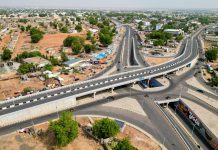
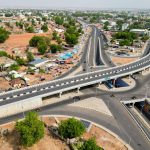
2. The reported explanation yesterday by Governor Ahmadu Umaru Fintiri for his regime’s construction of multiple flyovers in Yola not only raises a fundamental question about his philosophy of governance but also his competence to govern well. Should the conception and implementation of public policies be dependent upon the observation of an important visitor, the success of the governor’s leadership be measured by the magnitude of the structures he builds on account of that observation, or conversely by the extent to which his own initiated policies improve the lives of the people who finance them?
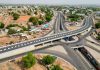
3. At his 59th birthday lecture, Governor Fintiri reportedly traced the inspiration for his administration’s flyover programme to a challenge posed by former Vice-President Yemi Osinbajo during a visit to Adamawa State in September 2019. According to the Fintiri, Osinbajo questioned why Yola lacked flyovers, and the governor decided to take up the challenge. The regime subsequently pursued a programme that eventually brought the number of flyovers and associated interchanges in Yola to five.
Related news
Fintiri justifies his administration’s huge investments in flyovers at 59th birthday lecture
Yola residents need water not flyovers, Sen. Abbo tells Fintiri
4. So if Osinbajo had not come to Yola or had not made that observation Yola would not have had flyovers under the Fintiri regime! By this confession, I thank God that Fintiri himself has vindicated my longstanding assertion of his leadership capacity by admitting that he is a man of no ideas of his own. But still I will not thank the former Vice President for that observation because it ended up costing Adamawa state heavily.
5. Not that flyovers are inherently bad. They can be necessary infrastructure if properly located and designed. They can reduce congestion, improve road safety, shorten journey times and support economic activity. But the issue is that these particular flyovers undertaken in Yola were not justified by demonstrable public need as their costs were not proportionate to their benefits, the financing arrangements were not prudent, the procurement arrangements have not maximised local economic value and the expenditures made do not represent the best available use of Adamawa’s limited resources.
6. And this poor act of the Fintiri government is not surprising. He did not weigh the logic of the presidential visitor’s observation. Yes, a vice president’s comment may inspire a governor, but it cannot by itself plunge a wise governor into blindly undertaking such a monumental task. He should have set up a technical committee to undertake a thorough feasibility study to establish its economic necessity, demonstrate the engineering capacity, whether and why Adamawa needed these particular flyovers, in these particular locations, at these particular costs, at this particular stage of its development, etc. And if he did set up such committee then the outcome has not shown that it did a good job. Its report ought to have been reviewed by a wise government and rejected.
7. That would have separated the politics of the flyovers from the philosophy of development. But no, not Governor Ahmadu Fintiri – Vice President had made an observation and so it must be done no matter how and at whatever economic consequences to the state. A comment of a Vice President who probably never visited and slept in Yola on his own before, and therefore who knew nothing about Adamawa and its pressing problems and needs, should not be a reason enough to undertake such an elaborate scheme.
8. It is very sad that Governor Fintiri elevated a political encounter into a governing rationale. The fact that a distinguished visitor asked why Yola had no flyovers establishes neither that Yola needed them nor that their construction should have been a development priority. An observation is not a diagnosis. A question is not a feasibility study. A challenge is not an economic appraisal.
9. The Vice-President may have been expressing a genuine concern about urban infrastructure. The governor may reasonably have interpreted the observation as an invitation to modernise the state capital. But as I earlier said and will repeat for emphasis, the proper response to such an observation should have been to commission a comprehensive transportation study examining traffic volumes, congestion patterns, accident rates, road capacity, projected population growth and the comparative costs and benefits of alternative interventions. The resulting study should then have determined whether Yola needed flyovers, improved junctions, traffic signals, road widening, better public transport, alternative routes or some combination of these measures.
10. Instead, the explanation reported by the media appears to emphasise the origin of the political decision without supplying the corresponding technical and economic evidence needed to assess it. This distinction matters because government is not an exercise in satisfying the expectations of visitors. It is an exercise in identifying public needs and allocating limited resources to meet them. A visitor may suggest a project. The government must justify it to the people. Adamawa did not elect a governor merely to respond to challenges issued during official visits. They elected a government to identify their most pressing needs, establish priorities and deploy public resources accordingly.
11. As I said, I will not thank Osinbajo for that comment because it plunged Adamawa into avoidable debt. In fact, I blame Osinbajo for not instead asking Fintiri why Yola lacked a modern water-treatment plant, why its public schools lacked adequate facilities or why its health centres could not provide reliable essential services. Maybe because he didn’t ask that is why the governor did not consider those observations equally worthy of immediate action. Or didn’t Osinbajo see the thousands of yellow jerrycans of unclean water being pushed by unemployed youths all over the state capital? Didn’t he see the heaps and heaps of dirt and debris littered in terrible sanitary conditions all over the state capital? Didn’t he see destitutes lined up the streets, in the motor parks, market areas and all over the place? Why is it that only the flyover question generate such a conspicuous infrastructure programme? What is the justification of five flyovers within a relatively small geographical area of less than two kilometers from each other? Does the geographical proximity of these structures correspond to an equally concentrated pattern of traffic demand?
12. These are legitimate questions of public accountability, not objections to urban development. The authority of a public decision does not derive from the status of the person who inspired it. It derives from the evidence that justifies it and the public interest that it serves. When Adamawa spends public money, it should acquire not only the infrastructure it needs, but also as much productive capacity, technical knowledge, employment and legitimate local economic value as can reasonably be secured.
13. Very importantly also, borrowing to finance the flyovers raises another issue that cannot be resolved by simply stating that the projects are capital investments. Borrowing is not inherently irresponsible. Governments frequently borrow to finance infrastructure whose useful lives extend over many years. Properly structured borrowing can distribute the costs of a long-lived asset across the generations that benefit from it.
14. The problem arises when the benefits are uncertain, the financing is expensive, the repayment burden is excessive or the investment fails to generate sufficient economic and social value. And this is exactly the case with these flyovers.
15. The public record provides grounds for examining Adamawa’s borrowing arrangements. In April 2021, the Guardian reported the state government’s explanation that it had borrowed to finance capital projects, including flyovers and an interchange. That report concerned borrowing at that time; it does not, by itself, establish the precise financing terms of every subsequent flyover contract.
Accordingly, the claim that the flyovers were financed through particular commercial-bank loans carrying high interest rates must be tested against the relevant loan agreements and state debt records. The public needs to know the amount borrowed for each project, the lender, the interest rate, the repayment period, all applicable fees, the grace period, the repayment schedule and whether any public revenues or other assets have been pledged as security. It should also know the total lifecycle cost of each project, including maintenance and eventual rehabilitation.
16. These are not technical details that can be left entirely to financial administrators. They determine how much money will remain available for other public purposes over the life of the loans. The fact that the state borrowed at a high interest rate to finance the flyovers whose economic benefits are zero makes the demand for accountability even more pressing. As it is the servicing of these debts is consuming the revenue that could otherwise fund schools, water infrastructure, primary healthcare, sanitation or productive employment programmes. The public will end up paying twice: first through the opportunity cost of the original investment and later through the cost of servicing the debt. That is why the economic return on the borrowed flyovers cost should be of serious concern to every Adamawa indigenes, especially to the in-coming administration.
17. Where residents continue to face serious deficiencies in water, sanitation, healthcare, education and employment, the government has a responsibility to demonstrate that its allocation of scarce resources reflects a coherent assessment of public need. The issue is not whether Adamawa deserves modern infrastructure. It does. The issue is whether modern infrastructure is being integrated into a development strategy that adequately addresses the conditions under which Adamawa’s people live, learn, work and build their futures.
18. A state capital’s progress cannot be measured solely by the number of flyovers it possesses. It must also be measured by the safety of its drinking water, the condition of its schools, the reliability of its healthcare, the productivity of its economy, the reduction of poverty in its society and the opportunities available to its young people. A child who cannot attend a properly equipped school, a family without reliable access to safe water, a patient unable to obtain essential treatment and a young person without a viable economic opportunity are all part of the same development equation as the motorist who benefits from a better road.
19. Their needs may differ, but their claims on responsible government are equally legitimate. This is why the debate must move beyond the spectacle of construction to the substance of development. A government may leave behind bridges, roads and buildings. Its more important responsibility is to leave behind a society whose people are healthier, wealthier, better educated, more productive and more secure than they were before. And the ultimate test of leadership is not the number of projects an administration can point to, but the quality of the future its decisions make possible. And here Fintiri’s leadership has woefully failed.
Ardo, a politician, analyst, development expert and academic writes from Abuja.