Seeing is believing: Sen. Yohanna unveils 3-year legislative scorecard, documents 41 projects, 98 appointments
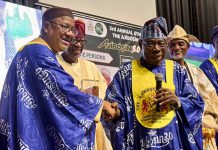
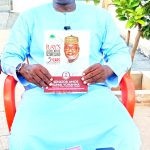
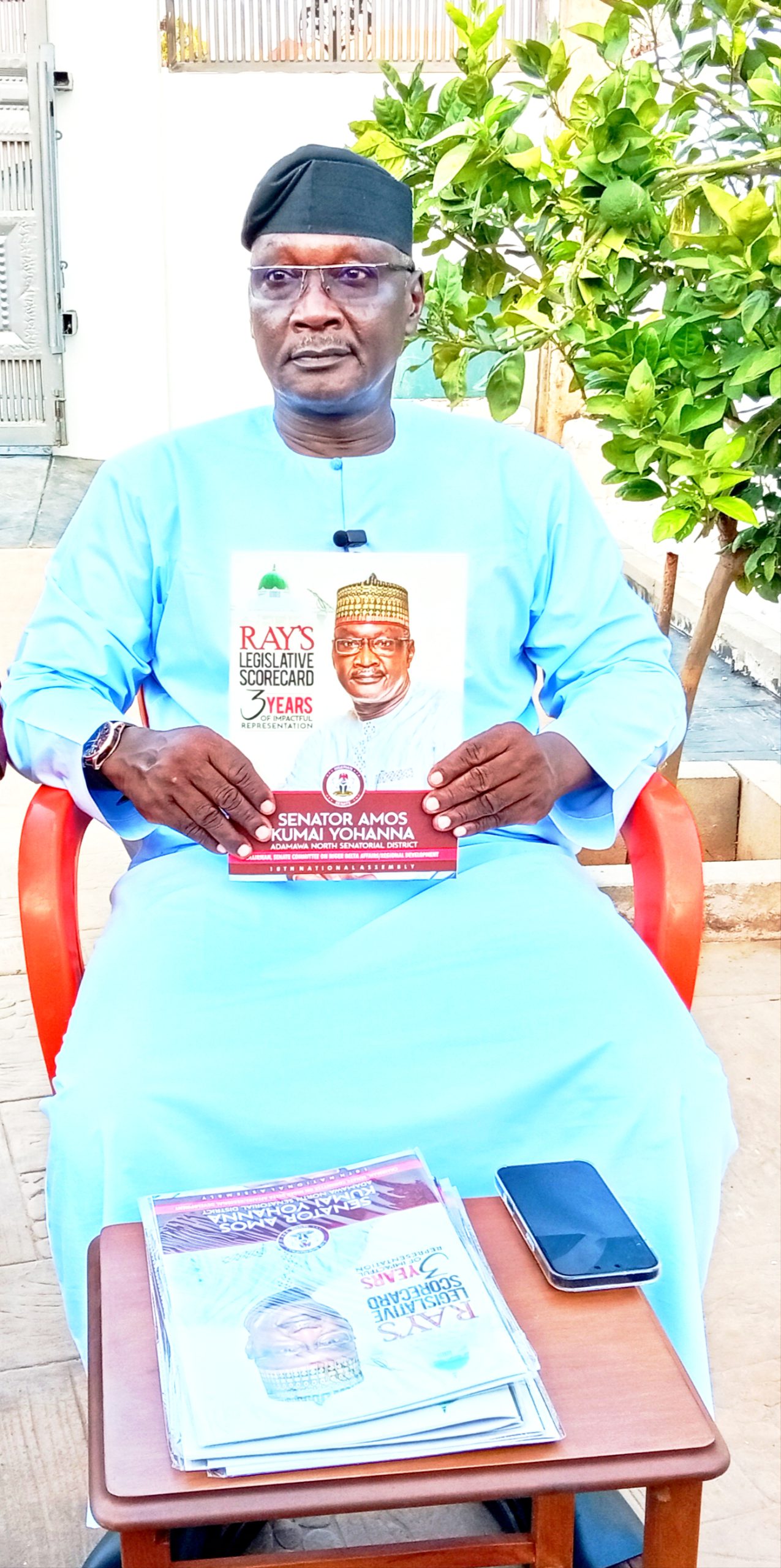
Senator representing Adamawa North Senatorial District, Amos Kumai Yohanna, has unveiled a comprehensive compendium documenting his legislative activities, constituency projects and other interventions during his three years in the National Assembly.
The publication, titled RAY’s Legislative Scorecard: Three Years of Impactful Representation, provides a detailed account of his stewardship, covering infrastructure, education, healthcare, employment facilitation, agricultural support, youth empowerment and legislative initiatives across the five local government areas of Adamawa North.
Sen. Yohanna commends Fintiri for bringing succor to Adamawa north
Senator Amos Yohanna: A Transformative Leader Elevating Adamawa North
2023: Group vows to pressure industrialist, Shafani to represent Adamawa north at senate
The unveiling of the compendium, built around the philosophy of accountability and transparency, gives constituents an opportunity to examine the senator’s claims and assess the projects and programmes he says he has attracted to the district.
According to the scorecard, Yohanna has facilitated 41 constituency projects spread across Madagali, Michika, Mubi North, Mubi South and Maiha local government areas, with 24 listed as completed and 17 at various stages of execution.
The projects cut across education, healthcare, electricity, water supply, agriculture, rural infrastructure and economic empowerment.
In the education sector, the senator listed the construction of classroom blocks and examination halls in several communities, including Sorau in Maiha, Kirchinga in Madagali and Mijilu in Mubi North.
Other interventions include classroom blocks at Yelwa Primary School, Pakka, Girpata and Wuro Patuji, as well as a JAMB examination centre in Gulak, Madagali Local Government Area.
The Gulak centre is expected to ease the difficulties previously experienced by candidates from Gulak and neighbouring Michika communities who travelled to Mubi to sit for examinations.
The senator also facilitated the payment of JAMB registration fees for hundreds of candidates drawn from the five local government areas.
In healthcare, the scorecard documents the provision of solar-powered electricity systems to six critical institutions, including the Federal Medical Centre, Mubi; Federal Polytechnic, Mubi; Adamawa State University; Michika General Hospital; Gulak Cottage Hospital and Mayo Nguli Cottage Hospital.
The 30KVA solar installations are intended to improve electricity supply to essential hospital departments, laboratories and other critical facilities.
Also listed is a medical centre attached to the College of Health Technology in Michika, alongside plans for primary healthcare centres in Gima, Mubi South; Madagali; and Mamzari in Maiha Local Government Area.
In the water sector, the publication records the installation of solar-powered boreholes in several communities to improve access to potable water.
These include interventions in Bazza, Anguwan Kara, Mayo Nguli, Michika, Yelwa, Sukur and other communities across the district.
The senator’s intervention in youth and women’s economic empowerment is another major component of the compendium.
The scorecard lists vocational and entrepreneurial training programmes involving 100 youths in information and communication technology, 50 women in modern tailoring, 100 women in poultry farming and 50 young women in hairdressing.
Beneficiaries were also provided with relevant equipment and starter packages to enable them to establish small businesses and become economically independent.
Other interventions include training in hardware maintenance and climate-smart agriculture, alongside the distribution of sewing and grinding machines.
On agriculture, the publication documents the distribution of fertiliser and other farm inputs to support farmers, as well as assistance to dry-season farmers through irrigation equipment.
It also records the distribution of food items and solar streetlights as part of efforts to improve livelihoods and community infrastructure.
The scorecard further highlights the senator’s employment facilitation efforts, listing 98 beneficiaries across federal and state institutions and security agencies.
The institutions include the Federal Airport Authority of Nigeria, Nigeria Revenue Service, Federal Character Commission, Federal Medical Centre, Mubi, University of Maiduguri and other government establishments.
In a separate interview preceding the publication, Yohanna disclosed that his intervention had facilitated employment opportunities for 99 graduates and other qualified constituents, including 45 young people recruited into the Nigeria Police Force.
The publication also showcases his legislative contributions in the 10th National Assembly, where he serves as Chairman of the Senate Committee on Niger Delta Affairs and Regional Development.
Among the legislative initiatives highlighted is the proposed establishment of the Federal University of Agriculture, Mubi, through an enabling Act to give the institution statutory backing.
He has also sponsored the Public Infrastructure Maintenance Bill, 2025, as part of efforts to address the persistent challenges of maintaining public infrastructure.
Other legislative engagements include motions on disaster management, infrastructure development, security and interventions aimed at addressing challenges confronting his constituents.
In October 2024, for instance, he raised concerns on the floor of the Senate over devastating floods in parts of Adamawa North, drawing attention to the destruction of homes and farmlands and seeking federal intervention for affected communities.
His committee responsibilities and membership of other Senate committees have also provided opportunities for him to participate in discussions on national security, defence, education, health and budgetary allocations.
Yohanna has maintained that representation should not be restricted to debates and motions in the National Assembly but should also translate into interventions capable of addressing the practical needs of the electorate.
He has consistently argued that although lawmaking, oversight and representation remain the primary constitutional responsibilities of legislators, elected representatives should also facilitate development opportunities for their constituencies.