Sultan foundation raises ACJL awareness at Boni quarters mosque
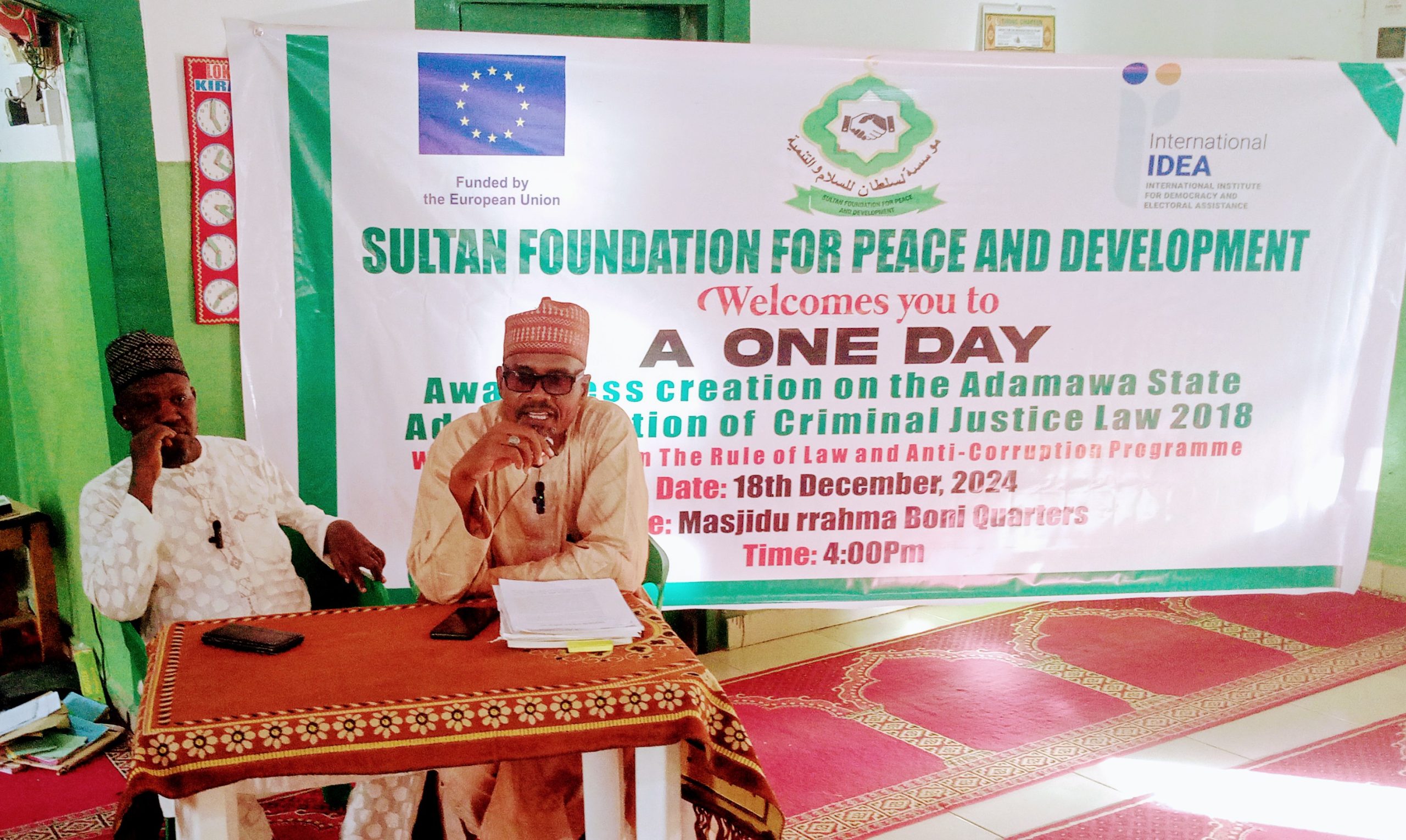
As part of its ongoing efforts to enhance public understanding of the Administration of Criminal Justice Law (ACJL) in Adamawa State, the Sultan Foundation for Peace and Development conducted a one-day awareness campaign at Masjidurrahman Mosque in Boni Quarters, Jimeta, on Wednesday.
The program was organized in collaboration with the European Union-funded Rule of Law and Anti-Corruption Program (RoLAC).
Related news
ACJL: Sultan Foundation raises awareness at Modibbo mosque in Adamawa
Sultan foundation parleys Adamawa community on human rights, ACJL
Sultan foundation consolidates ACJL in Adamawa, take awareness to Sunshine motor Park
The ACJL, which came into effect in Adamawa State on December 10, 2018, was introduced to address inefficiencies in the criminal justice system, prioritize fairness, and safeguard human dignity. The law also emphasizes protecting the rights of citizens, particularly vulnerable groups, while promoting justice and transparency.
Speaking to the congregation, Barrister Ishaq Abdullahi, the Director of Public Prosecution (DPP) in Adamawa State, provided an in-depth explanation of the ACJL. He emphasized that the law was designed to uphold fundamental human rights while ensuring efficient and effective justice administration.
“The ACJL was created to protect the rights of suspects and accused persons while fostering accountability and transparency in the criminal justice process,” he stated.
Barr. Abdullahi outlined several critical reforms introduced by the ACJL, including:
– Prohibiting arrests of one person in place of another.
– Allowing women to serve as sureties in legal proceedings.
– Ensuring suspects are treated with respect and dignity.
– Establishing dedicated rooms for recording suspects’ statements to improve transparency.
– Introducing non-custodial sentencing options as alternatives to imprisonment.
– Prohibiting arrests in civil matters.
– Providing free legal representation for suspects unable to afford it.
He further highlighted that law enforcement officers are now required to inform individuals of the reasons for their arrest clearly. Additionally, physical and biometric data of suspects must be collected, and statements must be electronically recorded in the presence of a lawyer or trusted individual to ensure accountability.
Barrister Musa Maisaje, in his remarks, explained that the Administration of Criminal Justice Act was enacted at the national level in 2015 before being domesticated in Adamawa State in 2018. He reassured participants that during the domestication process, the law was reviewed to align with the cultural and religious values of the people of Adamawa.
Maisaje encouraged the congregants to utilize the knowledge gained to protect their rights and hold law enforcement agencies accountable for their actions.
One of the participants, Salihu Muhammad, commended the Sultan Foundation for the enlightening session. He expressed gratitude for the knowledge gained, stating that it has empowered him to understand and safeguard his rights, as well as those of others, against potential abuses by law enforcement, particularly the police.
Through initiatives like this, the Sultan Foundation continues to play a vital role in bridging knowledge gaps, fostering legal awareness, and promoting the rule of law in Adamawa State.