
Fintiri is one of the most impactful governors in Adamawa’s history – Sen Girei
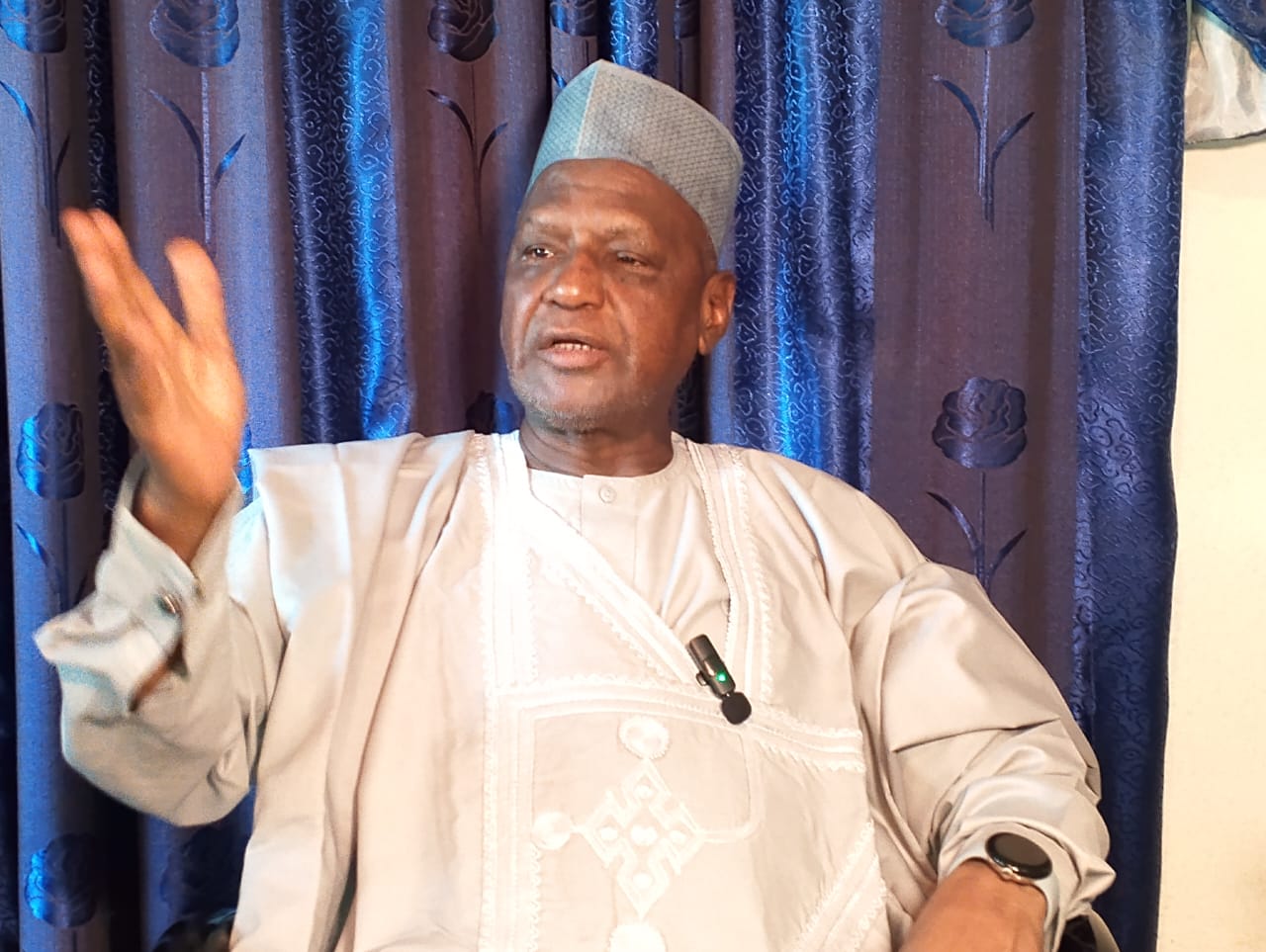
In this interview with newsmen in Yola Sen. Abubakar Halilu Girei has in unambiguous language extolled the leadership qualities of governor Ahmadu Umaru Fintiri saying he is one of the most impactful governors in history.
Girei, an elderstatesman, noted that Fintiri is one leader with tremendous courage, and exceptional pedigree who has shown that with political will and commitment, a leader has no limitation about what he could do to his people.
Related news
2027 polls: Speak for yourself not North, Sen. Girei slams Babachir
Sen Girei congratulates Garba, Salihu, Shuaibu over fresh appointments by president Tinubu
Amidst economic crisis, Sen. Girei suggests how Nigeria could generate over N500trn
Girei who also spoke about other sundry national issues also vouched for president Bola Ahmed Tinubu noting that the president has been making appreciable strides. He also called on the president to do everything possible to address the hardship, naira devaluation and inflationary trends that have bogged down the economy of many families.
Excerpts:
Adamawa State governor, Ahmadu Umaru Fintiri has recently created new chiefdoms and Emirates. What are your thoughts on the creation of the new chiefdoms and Emirates?
I would like to take this opportunity to congratulate the newly appointed emirs and chiefs and wish them a successful tenure. I also hope and pray that this marks the beginning of peaceful coexistence in Adamawa State. Since childhood, I have known that people from Hong and Dumne have been agitating for this, and now that God has granted it, I hope they will find happiness and live peacefully with their fellow citizens across the state.
Other emirs across the state’s chiefdoms believe this move will serve as a catalyst for development in their areas. I have no doubt it will lead not only to political but also social and economic advancement in various chiefdoms. I commend the governor for taking such a bold step. As my brother, former Governor Bala Ngilari, once said: “I wish I had the guts, and the courage to do the things Fintiri is doing. It’s rare to find someone with that kind of courage. Thank God he’s here, and he’s done it.”
Though I may not agree with everything he did, I commend Governor Fintiri’s courage, and I pray it fosters peaceful coexistence throughout the state.
In some areas, the creation of chiefdoms and emirates has caused discontent. For instance, there’s an ongoing legal tussle in Fufore. What’s your take?
Girei: That’s normal and natural. There’s no way everyone will be 100% satisfied. Whoever is unhappy has a constitutional right to seek redress, including legal action. As long as it’s done peacefully, I have no issue with it. Let them go through the legal process. Whatever the outcome, we should accept it in good faith. No quarrel at all.
Question: Now that Governor Fintiri is in his second term, how would you rate his performance and leadership, particularly regarding reforms and general policies?
Girei: As an APC stakeholder, I naturally wish it was my party in government. You may not like Fintiri’s face or his party, but even one elder told me, “Whether we like it or not, Fintiri is one of the most impactful governors Adamawa has had.” The perception of impact differs, but the fact remains: he has made a mark.
You can visibly see his legacy in Yola axis and beyond. Whether or not you like him, these are facts on the ground. I started by saying I wish it were my party in power so we could share the credit. Nevertheless, we’re working hard to bring APC back, and I can assure you that we’ll build on the successes he’s achieved.
Question: Some criticize the cost and priority of projects like flyovers. What’s your view?
Girei: I didn’t say I totally agree that flyovers are what the people need most. Personally, I believe education should have been the top priority in Adamawa. Since 1999—or let’s say 2003, when I first ran for governor—my policy focus has been on human capital development. You can’t develop a state without developing its people.
Education and healthcare should come first. In my view, education hasn’t been given adequate attention under Fintiri’s administration. That’s a fact. However, if he chooses to leave a legacy project first, that’s his prerogative. What matters is that he has delivered visible achievements—whether or not you agree with the cost.
Question: Critics argue that most of Fintiri’s projects are concentrated in the capital at the expense of rural areas what is your take?
Girei: I can’t comment extensively because I haven’t traveled across the state. However, I was recently in Mubi and took a bypass that passes former Governor Bindow’s house. I was told Fintiri built that road—commendable. I’ve also heard from residents of Michika and Madagali about four major bridges that now allow night travel, all credited to Governor Fintiri. This doesn’t mean he has done everything perfectly—development is a continuous process. Fintiri has laid a strong foundation, and we hope his successors will build on it for the continued development of Adamawa.
Question: There’s a perception that Nigeria is becoming a one-party state under APC. Is that healthy for democracy?
Girei: It’s not ideal—but who’s to blame? A political party is like a private company; its goal is to grow and win. APC’s focus is on promoting itself. It’s not our job to build up opposition parties. If they’re failing, don’t blame us.
The Constitution is clear—Sections 68 and 109 address party defection and its consequences, especially for legislators. It doesn’t give the president or governors the power to act—it’s the legislative leadership’s responsibility. Personally, I don’t even agree with that provision; many countries don’t have it.
A political party is like a marketplace—you’re free to go where you want. Nobody should punish you for that. People also have the right to form or merge parties. If it’s done sincerely to improve the country, they may succeed. But if it’s just to unseat the president, they won’t.
Question: Is President Tinubu using the EFCC to coerce members into APC?
Girei: The EFCC wasn’t created by Tinubu—it was established in 2002 when I was in the Senate. We were fortunate to have Nuhu Ribadu as its first chairman. He was globally celebrated. Since then, the EFCC has been doing its work.
Question: Even under Ribadu, there were allegations of political witch-hunting.
Girei: Allegations will always arise, but has any been proven in court? People make noise instead of organizing themselves into a viable opposition. They’re watching as APC grows stronger—and that’s why they’re trooping back. Nobody is forcing them.
Question: Tinubu has been in power for two years. How would you rate his administration?
Girei: I’d give him a pass mark. There’s hardship—no doubt. I’m personally affected; I can’t even turn on my AC due to high electricity tariffs. That policy needs immediate reversal, among others like the exchange rate and fuel price.
However, I believe the president will review these policies by 2027. I personally in the course of our last interaction recommended increased funding for security, and he delivered. He also allocated 1.5 trillion naira for agricultural revitalization through the Bank of Agriculture which was also one of the strong recommendations I made in my last address on the state of the nation. That means president Tinubu is a listening president. By 2027, many changes will happen, and APC will likely secure another victory—especially in Adamawa.
Question: What about rising insecurity and the calls for state police?
Girei: I’ve always supported state police—even as far back as 2003 in the Senate. Policing isn’t just a national concern. We’ve studied countries like Tanzania and Singapore—they have community, local, and national police.
If we empower local governments fully, they’ll act like mini-governors and ensure local security. Community policing brings the system closer to the people. That’s key to addressing our security challenges.
We must also address social roots—education is vital. In our days, we had craft schools where we learned trades. Those are gone. Governor Nyako once revived skill centers in Adamawa—some of which even attracted Dangote. Sadly, they’ve been dismantled. We must prioritize education, not just literacy but also life skills.
Question: What’s your view on the student loan program?
Girei: I don’t have full details, but I’ve heard that many students and institutions have benefited. There are also reports of fraud, which are being investigated. The program is laudable and must be sustained—but we must eliminate corruption, especially in education.
Question: President Tinubu declared a state of emergency in Rivers State. Some see it as a step toward anarchy what is your take?
Answer: (Laughs) The Rivers issue is complicated—it shouldn’t have escalated like this. The major actors were irresponsible. Fortunately, Tinubu stepped in and restored calm.
Fubara’s return and declaration of peace should have been the end, but the State Assembly moved for impeachment. That showed the conflict wasn’t truly resolved.
Declaring a state of emergency and removing the governor is unconstitutional in my opinion. However, without it, the Assembly—whose members had defected and should have lost their seats—would have impeached Fubara. So perhaps there was no better alternative at the time. We only hope for lasting peace and that Fubara finishes his term.
Final Thoughts on the Senate Issue and Natasha:
Some issues are better left unspoken. What happened shouldn’t have, but since it did, we pray that Natasha is recalled and allowed to represent her constituency. The matter has tainted the Senate’s image, and the institution must reclaim its lost glory.