
Adamawa targets over 1.3m children in 2nd round immunization from 2 – 5 May
The Adamawa State Government, in collaboration with UNICEF and other development partners, has reaffirmed its strong commitment to child survival and disease prevention through the successful implementation of the Sub-National Plus Immunization Days (SNIPDs), a strategic public health intervention designed to bridge immunity gaps among children under five.
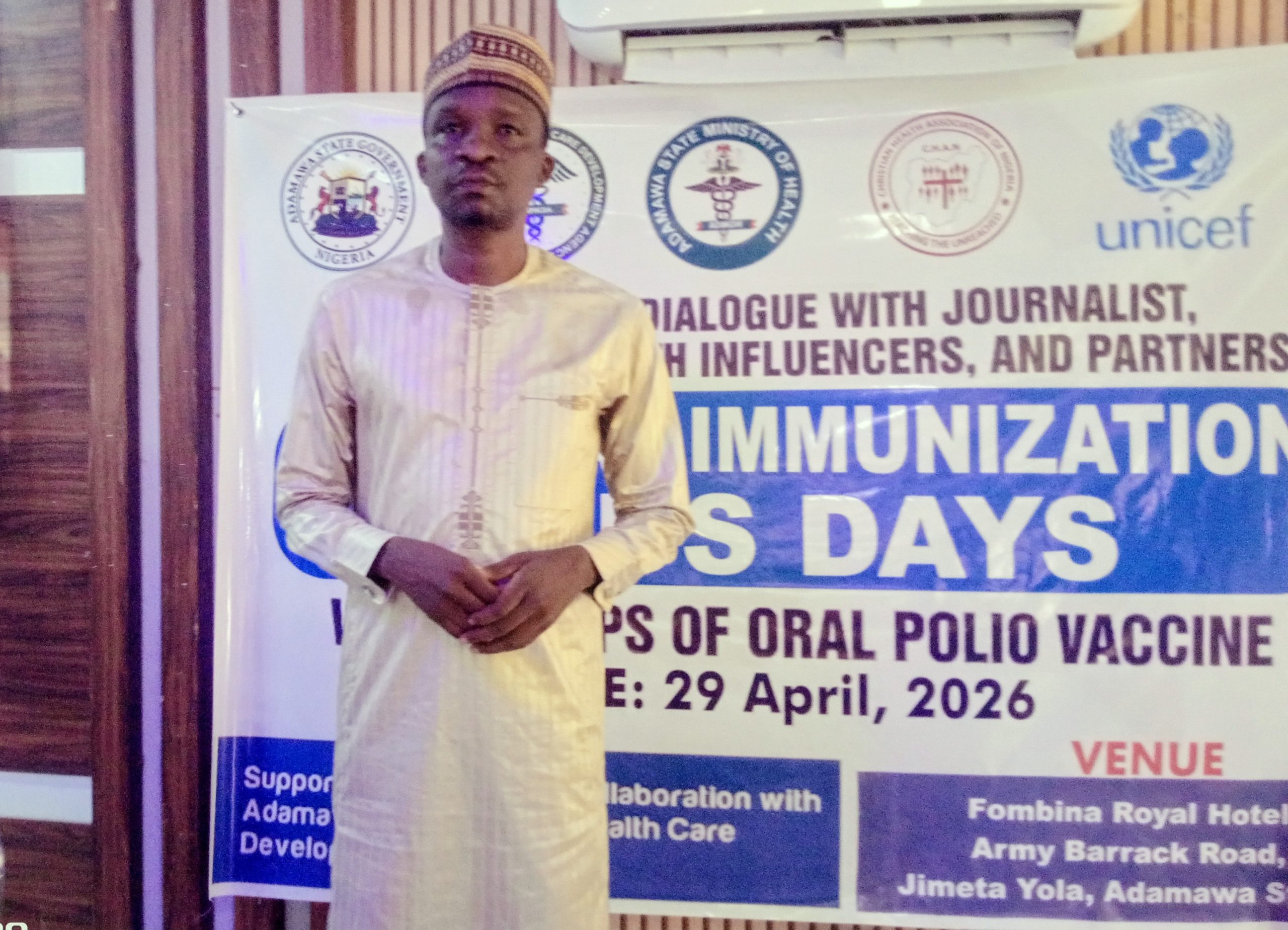
Speaking during a media dialogue with journalists, social media influencers, stakeholders, and development partners in Yola on Wednesday, Dr. Jacobs Vasumu highlighted the progress, preparedness, and significance of the upcoming second round of the immunization campaign, describing it as a critical continuation of the state’s broader health agenda.
Related news
Adamawa kicks off fresh wild polio vaccination from 11 – 14 Nov 2023
HPV Vaccination: How UNICEF- Supported Community Structures Enhance Rollout Campaign in Bauchi
More children to enrol in schools as Adamawa, partners consolidate ECW project
Dr. Vasumu explained that the second round of SNIPDs, scheduled to hold from May 2 to May 5, with two additional mop-up days, is largely a continuation of the first round conducted a month earlier.
According to him, the exercise is structured to consolidate previous gains by reaching more eligible children and ensuring no child is left vulnerable to preventable diseases.
“There is not much difference between the previous round and this one. The goal remains the same, to bridge immunity gaps. We are applying nearly the same implementation, monitoring, and post-implementation strategies, with adjustments only where there may be population increases or additional vaccine requirements.”
He disclosed that Adamawa State is targeting 1,301,795 eligible children aged 0 to 59 months, emphasizing that the campaign will also vaccinate children visiting the state or newly born during the exercise period.
To ensure seamless coverage, he said the state has secured 1,584,740 vaccine doses, a figure deliberately exceeding projected needs to provide a strategic buffer stock for unforeseen demand.
“We always plan beyond our target to accommodate new births, visitors, and any unexpected increase in eligible children. Every child matters,” Dr. Vasumu noted.
The success of previous rounds, he said, has been strengthened by sustained stakeholder engagement, including traditional rulers, religious leaders, media practitioners, and grassroots mobilizers who continue to combat misinformation and vaccine hesitancy.
Despite remarkable progress, Dr. Vasumu acknowledged operational challenges such as fatigue among frontline health workers, difficult weather conditions, and maintaining vaccine potency in high temperatures through strict cold chain management systems.
“Our teams move from house to house under intense weather conditions, so fatigue is a challenge. But we are also very deliberate about vaccine safety by maintaining required temperatures with ice packs and proper logistics,” he explained.
He further revealed that while vaccine refusal still exists in isolated pockets, resistance has significantly reduced due to aggressive sensitization campaigns and community-level advocacy.
“Media support, community engagement, and the roles played by religious and traditional institutions have greatly minimized resistance. Their involvement has been instrumental to our successes,” he said.
Dr. Vasumu also addressed public concerns regarding the delayed rollout of the malaria vaccine in Adamawa despite global breakthroughs. He clarified that Nigeria currently has limited vaccine supplies, with Kebbi and Bayelsa states prioritized for pilot implementation due to their heavier malaria burden.
“Like COVID-19 vaccines, malaria vaccine deployment is being done strategically based on disease burden and available supply. Adamawa will benefit as more doses become available nationally,” he assured.