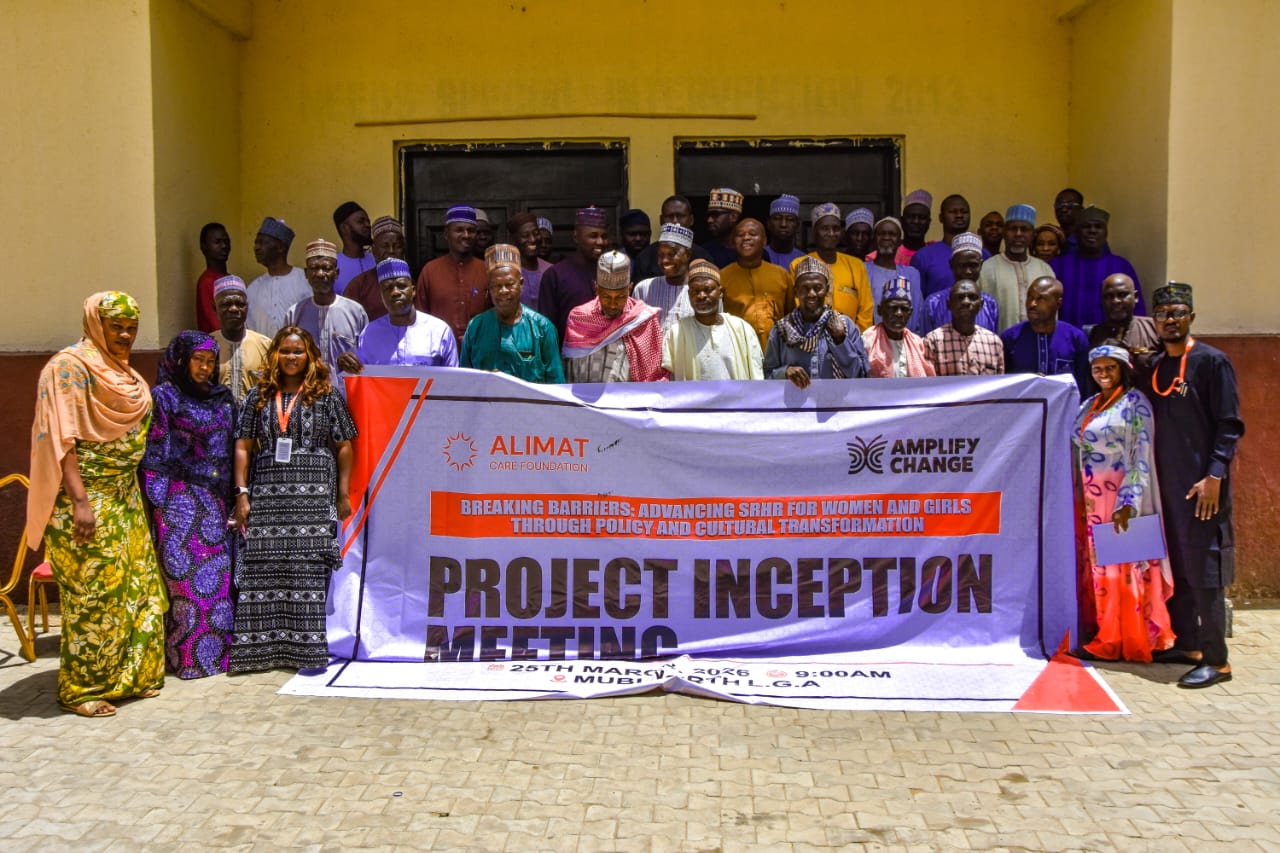

ACF unveils sexual, reproductive health and rights initiative for women, girls in Adamawa
Alimat Care Foundation (ACF) has unveiled an initiative to advance Sexual and Reproductive Health and Rights (SRHR) for women and girls in Adamawa.
The Executive Director of ACF, Mr Ibrahim Bello, disclosed this in Mubi LGA, during the inception launch of the project titled Breaking Barriers”, A New Chapter for Girls and Women in Adamawa.
Related news
IWD: Stakeholders advocate strengthening of women’s SRH in Adamawa
Alleged sexual misconduct: PDP decries Natasha’s suspension urges unbiased inquest
Adolescent girls in Adamawa call for more safe spaces, empowerment
Bello said the initiative, supported by AmplifyChange, focuses on policy reform and cultural transformation to improve rights, safety, and leadership of girls.
He said the project would be implemented in Mubi North, Mubi South, Maiha, and Michika Local Government Areas of Adamawa.
According to him, the launch provided a platform for dialogue, reflection, and shared commitment among stakeholders on girls’ rights, health, and informed choices.
“Conversations around girls’ rights and health were often muted, but this initiative will help change the narrative,” Bello said.
He said the project comes at a time when girls in North-East Nigeria face cultural barriers, limited access to health information, and weak accountability systems.
Bello said the initiative aligns with ACF’s mission to ensure every girl is safe, informed, empowered, and able to lead change in her community.
He added that the project aims to shift harmful norms, strengthen institutions, and create an enabling environment for girls to thrive.
Bello said the initiative envisions a future where girls have the knowledge, confidence, and support to make informed life choices.
The Programme Lead, Miss Yinasim Dagal, said the inception meeting attracted government officials, school leaders, civil society actors, and youth advocates.
Dagal said the meeting fostered collective ownership among stakeholders, which is essential for sustainable development and long-term impact.
She said the project addresses challenges in conflict-affected settings where poverty, displacement, and gender inequality expose girls to early marriage and gender-based violence.
“The initiative will bridge gaps between existing laws, including the Violence Against Persons Prohibition (VAPP) Law, and realities faced by women and girls,” he said.
Dagal said the project would focus on policy implementation, community engagement, and youth-led advocacy to achieve its objectives.
She added that ACF’s approach prioritises community-led transformation, ensuring women, girls, and youths actively participate in shaping solutions.
Dagal listed expected outcomes to include improved awareness of SRHR policies, youth empowerment, inclusive dialogue, and strengthened accountability systems.