
Adamawa’s uncrowned architects: A realist’s rebuttal to the Pulse of convenience
There’s a peculiar strain of social media commentary that treats leadership like a fantasy football draft — pick the flashiest names, ignore the workhorses and builders, then congratulate yourself on “curating greatness.” The recent Adamawa Pulse list is the political equivalent of releasing a highlight reel of only the touchdowns and pretending the offensive linemen never existed. To the armchair statisticians of Facebook, this op‑ed offers a gentle corrective and a reminder that states aren’t built on sound bites alone. Political theory teaches us that legitimacy grows where action meets social needs, not just where loud megaphones reside. In that regard, some leaders are like thunderstorms while others, almost unseen, irrigate the fields that feed a polity over decades.
Related news
10th senate presidency: Who succeeds Ahmed Lawan?
Adamawa’s huge debt elicits furore amidst rising allocations
Adamawa elders hail Yilwatda, Shuaibu over APC national leadership victories
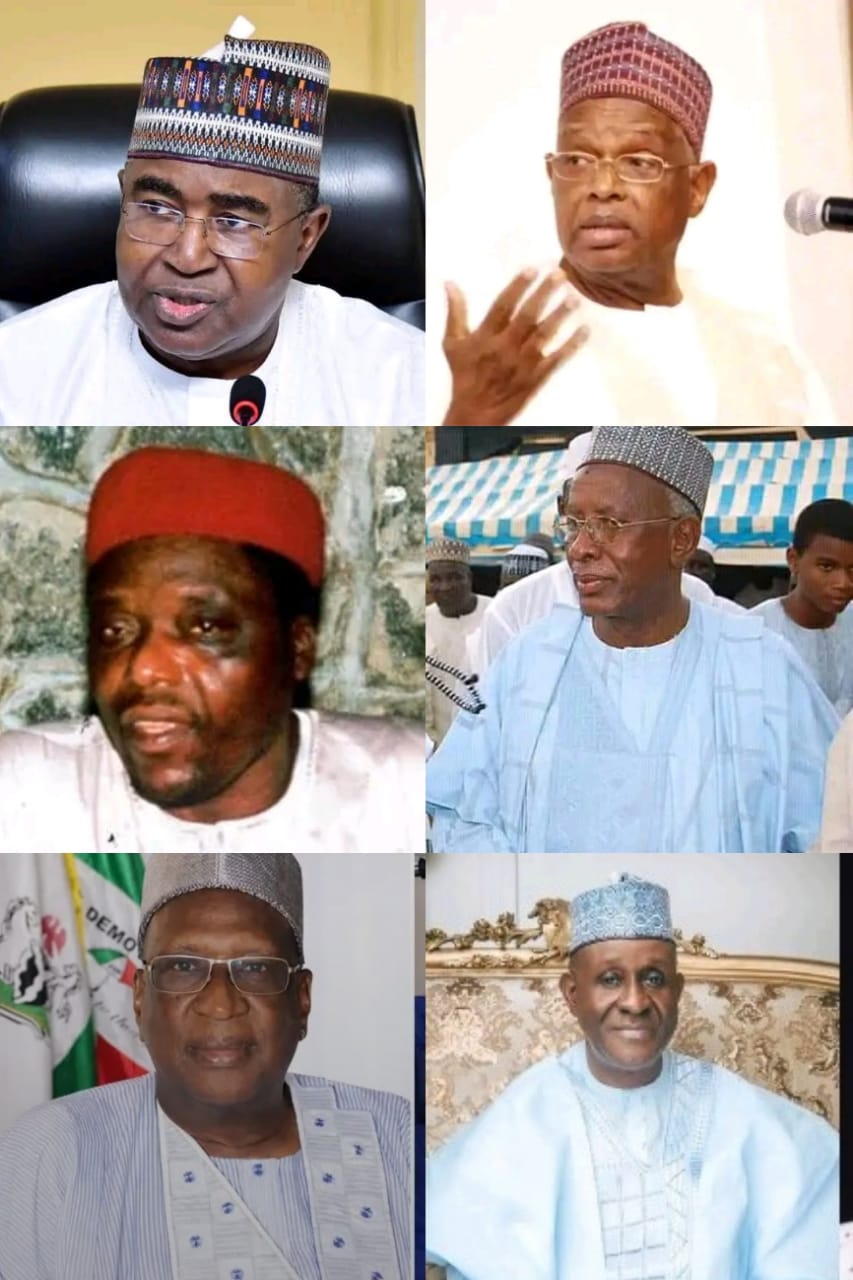
Alhaji Bamanga Tukur is the cartographer of our political terrain. In the politics of coalitions and party dynamics, Tukur was less a player and more a cartographer of influence. As National Chairman of Nigeria’s ruling party, he didn’t just manage internal party squabbles, he drew maps of patronage and representation that shaped political careers across the North.
Political scientists call this structural positioning: placing an actor not at the center of a moment, but at the crossroads of many moments. Tukur’s influence extended to how Adamawa negotiated its place in federal appointments, industrial networks, and party negotiations. His business acumen brought an economic dimension to leadership that defies reductive categorization: he was politician, strategist, and enterprise builder rolled into one. In the theatre of Nigerian politics, where many play roles, Tukur wrote much of the script.
Professor Jibril Aminu is the scholar statesman. If leadership had a PhD, Professor Jibril Aminu would have graduated summa cum laude. A physician, diplomat, minister, and ambassador, his career defies the usual siloed career paths of most political actors. Unlike those who ascend by fervor, Aminu ascended by fertilizing institutions.
Think of him as Adamawa’s institutional architect: designing policies that outlast personality, building bridges between local aspiration and national policy, and reminding us that governance without expertise is like building skyscrapers from sand. His tenure as ambassador to the United States wasn’t just prestige; it was runtime diplomacy that expanded Nigeria’s and by extension Adamawa’s diplomatic capital. In an era where global linkage determines local opportunity, Aminu was our envoys’ envoy.
General Buba Marwa is the reformist paradox. Marwa is the sort of national figure that makes political realists chuckle — a military man celebrated for bureaucratic reform. As Military Administrator of Lagos and Borno States, his tenure was defined not by coercion but by civil service modernization. That paradox discipline for reform is exactly why his career matters for Adamawa.
He didn’t govern Adamawa directly, yet he governed for Nigeria in ways that shaped the expectations of governance everywhere, including here. His administrative reforms became benchmarks, not footnotes, influencing how states like Adamawa should structure capacity rather than command spectacle. He demonstrated a truth seldom spoken: sometimes the best leadership is the leadership that strengthens others, not itself.
Bar James Bala Nngilari is ostensibly the quiet storm of stability. If Adamawa had a “steady hand” award, Bar James Bala Nngilari would win it by acclamation. Twice Deputy Governor, once Governor, and always the man in the room when others were debating posterity. Nngilari’s tenure didn’t come with fire-breathing campaign speeches, but with pragmatic governance during a period when stability itself was the rarest currency. As political realism would predict, when legitimacy falters, people look for order.
Nngilari responded not with rhetoric but with administrative resolve: restructuring councils, recalibrating state priorities, and navigating the complex legal and security terrain that defines Adamawa’s recent past. Many accounts in local circles attribute to him efforts to coordinate with the Federal Government on security challenges and beginnings of IDP relocations, widely circulated but not spotlighted in national archives, which tells us something important: the politics of remembrance often neglects the politics of repair. In other words: people don’t remember the one who kept the lights on, only the ones who promise brighter fixtures next time. He also supervised the recovery of 7 Local Government Areas that had fallen under the control of Boko Haram terrorists in 2014/2015—an intervention that underscores the often-underappreciated role he played in restoring territorial integrity and laying the groundwork for resettlement and recovery.
Governor Abubakar Saleh Michika is the rural realist. Michika’s governorship was short, but it was anchored in a philosophy that should inform every local government policy: development begins where people are. Rather than concentrating resources in capital cities and grandiose projects, he invested in education, infrastructure, and rural enterprise. The places that benefit most from governance are usually the ones no one tweets about, and Michika understood that.
His policies weren’t designed to win polls — they were designed to win a life improved. If democratization is judged by its footprint in everyday lives, then Michika scored where others merely scored political points.
Comrade Pascal Bafyau is the standard bearer of workers’ agency. Labor movements are often misunderstood as noise; in reality, they are some of the earliest warning systems of democratic deficit and economic distortion. Comrade Pascal Bafyau didn’t just lead Nigeria’s labor congress, he translated grievance into policy language, insisting that the state must owe workers dignity, fair compensation, and social protections.
For Adamawa, a state still wrestling with unemployment, underemployment, and labor precarity, Bafyau’s legacy isn’t nostalgia. It’s agency: the idea that citizens aren’t passive recipients of governance but active claim‑holders with rights to economic justice. Political theory calls this participatory equity. Bafyau lived it, argued it, and left a footprint that local activists still follow.
Why memory matters? Adamawa’s political imagination should not be confined to a laundry list of recognizable names and sound bites. Real leadership leaves institutional oxygen, it strengthens capacities, and it expands the political horizon not just for today’s columnists, but for tomorrow’s citizens. If history is a battlefield of ideas and actors, then let us honor not only the marquee names but also those whose work set the stage, fortified the foundations, and broadened the polity’s capacity for justice.
Because a state is more than a snapshot, it’s the sum of its stabilizers, its builders, its reformers, and its believers in collective agency. And Adamawa’s richest stories are still being told by those who lived them.
Calvin Anadio Lawan | Political Economist | Development Advocate | Writer