Two more Adamawa LGs to be free from open defecation as UNICEF unveils DGIS – ASWA III
The United Nations International Children’s Fund (UNICEF) has announced that two additional local government areas (LGAs) in Adamawa State—Ganye and Shelleng—are set to be free from open defecation by the end of this year.
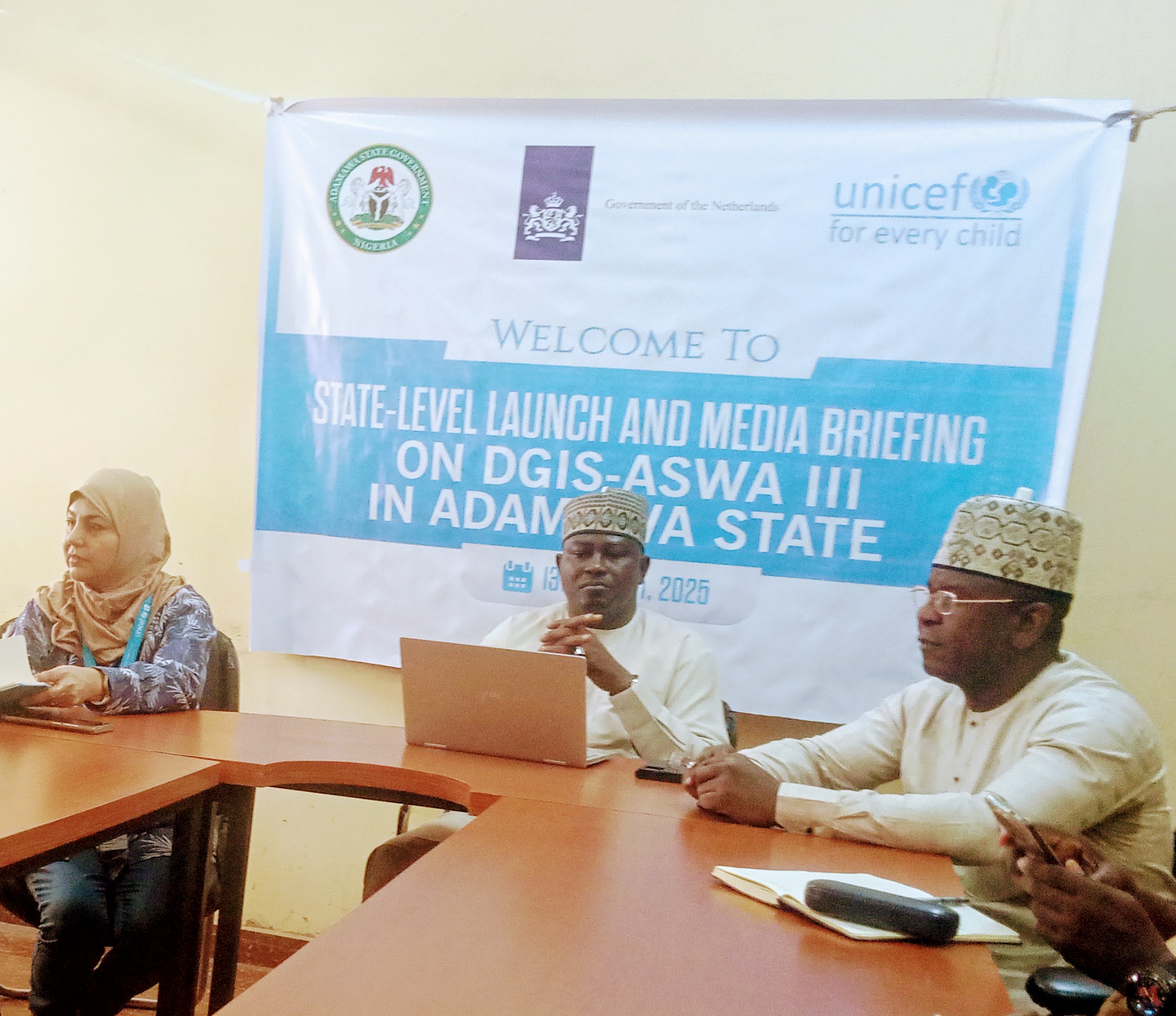
This significant milestone was disclosed by Dr. Nuzhat Rafique, the Chief of Field Office for UNICEF Bauchi, during the official state-level launch of the Accelerated Sanitation and Water for All (ASWA) III Programme (DGIS – ASWA III) and a subsequent media briefing.
Related news
ADSUBEB, UNICEF unveil new framework to upscale school enrollment in Adamawa
UNICEF issues emergency tender to secure Mpox vaccines for crisis-hit African countries
Dr. Rafique emphasized that this project will have a profound impact on approximately 150,000 vulnerable people residing in these two LGAs, ensuring they have access to improved sanitation and hygiene facilities. The initiative is part of a broader effort to address sanitation challenges and improve public health in the state.
During her address, Dr. Rafique also highlighted the success of the previous phase, ASWA II, which led to the eradication of open defecation in two other LGAs—Jada and Guyuk. The achievements of ASWA II played a crucial role in securing the approval for ASWA III, which will now extend similar benefits to more communities within Adamawa State.
Dr. Rafique explained that Adamawa State is one of the focal areas benefiting from the ASWA III initiative under the UNICEF Bauchi Field Office, with funding provided by the Government of the Netherlands.
“We are targeting people who are most vulnerable in communities where open defecation remains a critical issue. Many of these communities lack access to proper sanitation and clean water in homes, schools, and healthcare facilities,” she stated.
She further highlighted that poor sanitation disproportionately affects adolescent girls, particularly those who struggle with menstrual hygiene management due to the lack of adequate sanitary facilities in schools.
“Many young girls are forced to stay home during their menstrual cycle because of these challenges. By improving sanitation facilities, we can create an environment where they can attend school without interruptions,” she added.
Dr. Rafique underscored that while UNICEF is spearheading this initiative, the real driving force behind its success is the commitment of the Adamawa State Government and local council chairmen. Their role is vital in scaling up the intervention and ensuring sustainability.
“This initiative is just a small, powered project, but the major power lies in the commitment of the state government and local authorities. They must take ownership of this program and ensure that the progress made extends beyond the project’s immediate scope,” she explained.
UNICEF’s approach is to demonstrate the feasibility of these interventions, while the government is expected to replicate and expand them across other local government areas as part of its broader sanitation and hygiene commitments.
Aisha Yusuf, the ASWA Desk Officer in Adamawa, spoke about the tremendous impact of ASWA II in the Guyuk and Jada LGAs. She noted that the project significantly improved the lives of vulnerable populations, achieving remarkable success in areas such as eliminating open defecation, drilling solar-powered boreholes to provide clean water, Renovating schools and constructing sanitation facilities and improving hygiene infrastructure in healthcare centers.
She emphasized that the same approach and interventions will now be replicated in Ganye and Shelleng LGAs under ASWA III, ensuring these communities experience similar benefits.
Expressing his appreciation for UNICEF’s intervention, Audu Ayuba, the Adamawa State Commissioner for Water Resources, reaffirmed the government’s commitment to sanitation improvement.
He stated that the intervention aligns with Governor Ahmadu Fintiri’s Eight-Point Agenda, which prioritizes clean water and sanitation for all.
“We are grateful for UNICEF’s support in this sector. The government will do everything possible to close existing gaps and expand the initiative to other local government areas,” Ayuba assured.
The launch of ASWA III marks a significant step in eradicating open defecation and improving sanitation infrastructure in Adamawa State. With UNICEF’s expertise, government commitment, and community involvement, the state is on a steady path toward achieving better hygiene, improved public health, and enhanced quality of life for its residents.