Is Adamawa’s Education Sector Planning Missing Its Most Vital Stakeholders?
By Obidah Habila Albert
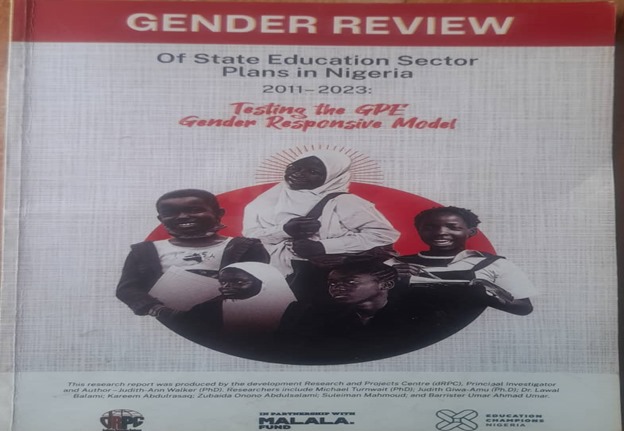
In Adamawa State, where tradition meets the promise of progress, the dialogue surrounding education is undergoing a transformative evolution. At the crossroads of policy and community, an education sector plan is more than a bureaucratic blueprint; it is a strategic document that holds the key to unlocking a future where every child has equal access to learning. Central to this transformation is the push for gender-responsive education planning, a strategy which acknowledges the unique challenges faced by girls and seeks to level the playing field in classrooms and beyond.
The Education Sector Plan
According to the Global Partnership for Education, an education sector plan (ESP) is an official government document that outlines the strategic vision and policy framework for a nation’s education system. It defines long-term objectives and sets out clear priorities to address challenges such as infrastructure gaps, teacher shortages, and inequitable resource allocation. An ESP is not only about expanding access to education but also about enhancing quality and ensuring equity, making it a comprehensive roadmap for reform. The plan is typically developed through a participatory process that involves a wide range of stakeholders, including government ministries, educators, local authorities, civil society, and international donors, to ensure that the strategies reflect the diverse needs of the community and the realities of the education system.
Related news
GRESP: FAWE, HILWA unveil resilient model for uninterrupted girl education in Adamawa
Beyond School Gates: Adama’s Dream and the Promise of Education
Adamawa unveils new education policy
A key component of an ESP is its emphasis on evidence-based analysis. Before setting targets and strategies, extensive data collection and research are undertaken to understand the current state of the education sector. This analysis informs the development of strategic priorities and helps to create realistic and measurable targets. Furthermore, the ESP includes a detailed financial framework that outlines both domestic funding streams and international aid, which is crucial for mobilizing the resources needed to implement the proposed reforms. This financial clarity not only attracts donor support but also builds public confidence in the government’s commitment to long-term educational improvement.

An important aspect of an education sector plan is its built-in mechanisms for monitoring and evaluation. Through the establishments of clear performance indicators and regular review processes, an ESP ensures accountability and allows policymakers to track progress and make adjustments as necessary. This ongoing evaluation helps to guarantee that the plan remains responsive to changing needs and that any issues or inefficiencies can be addressed promptly. Through these measures, the ESP creates a continuous cycle of improvement that enhances the overall quality and effectiveness of the education system.
Why is the ESP Important?
The importance of an ESP extends beyond the realm of education itself. A well-crafted plan serves as a critical tool for resource mobilization, enabling governments to secure both national and international funding. It also plays a significant role in coordinating efforts among various stakeholders, ensuring that everyone — from school administrators and teachers to community representatives — is aligned in working toward a common goal. Ultimately, the education sector plan is a cornerstone for driving sustainable development by laying the foundation for an inclusive and equitable education system that supports broader socioeconomic progress. Moreover, institutions like the UNESCO International Institute for Educational Planning (IIEP) provide technical support and guidance to help governments develop and implement these plans, further reinforcing their strategic significance in achieving national and global education targets.

Gender Responsive Education Sector Planning (GRESP)
Gender-responsive education sector planning (GRESP) is a strategic approach that embeds gender equality into every aspect of an education sector plan. Rather than focusing solely on achieving gender parity in school enrollment, GRESP requires that education policies, curricula, teacher training, and resource allocations are designed to address the specific barriers and needs that girls and boys face throughout their educational journeys. Through the incorporation of gender analysis into the planning process, systemic disparities such as gender biases in curriculum content, unequal access to quality teaching, and differences in school infrastructure that often hinder the educational outcomes of marginalized groups can be identified.
This approach is critical not only for improving learning outcomes but also for advancing broader social and economic development goals, including those outlined in Sustainable Development Goals 4 and 5. For instance, resources like the UN Girls’ Education Initiative’s “Gender-responsive education sector planning: A pathway to gender equality in education” provide practical guidance on how to mainstream gender perspectives into education reforms, while the guidance developed by UNGEI and the Global Partnership for Education offers detailed tools to support the integration of gender-sensitive policies into national education strategies. Such gender-responsive plans not only help in creating safer, more inclusive learning environments but also ensure that education systems contribute to the empowerment of all learners, thereby promoting equitable development and social justice.
Voices from the Field
Despite the transformative potential of the ESP and GRESP, stakeholders on the ground are raising serious concerns about the process behind its development. There is a growing chorus of voices questioning whether the plan truly reflects the needs of those it is meant to serve.
The Director of Social Mobilization at the Adamawa State Universal Basic Education Board (ADSUBEB) voiced deep concern over the planning process. “But for the invitation to attend the validation of the Adamawa State Policy on Education in December 2024, I have not been asked for my inputs in developing such a plan as well. Such a crucial plan requires inputs to ensure it captures specific challenges faced by girls,” she stated. Her remark highlights a significant disconnect between policy formulation and the contributions of those on the frontlines of social mobilization, particularly in addressing gender-specific challenges.
Similarly, the Chairperson of the Women Wing of the Christian Association of Nigeria in Adamawa State expressed her feelings. Although she is well aware of the ESP through her work with ADSUBEB, she admitted, “I have never been invited to contribute in developing the education sector plan, although I am aware of it because I work with ADSUBEB, but I don’t know how such a plan is developed.” Her response reflects a broader concern regarding the lack of meaningful consultation with key women’s groups who could offer vital contributions into the educational challenges faced by girls.
The Director of Basic Education at the Adamawa State Ministry of Education told this reporter “We are only being invited for the validation of such document. The truth is that I don’t even know of such document,” he noted, adding that the process seems more like a formality. “The reason why we are even invited is that such a document requires people for its validation, but regarding the formulation, I have no idea. Often times, these documents are being developed by organizations and we are only being invited when it is about to be launched.” His observation suggests that the development process may be confined to a select few, leaving critical stakeholders largely in the dark until the final stages.
The lack of engagement is not confined to these groups alone. Focal persons on religious and traditional matters from the Adamawa Emirate, along with key representatives in education, expressed their own unawareness of the plan and its development process. Both the Chairperson of the Women Wing of the Muslim Council and the Chairman of the Adamawa State Muslim Council confirmed that they had not been involved. This pervasive exclusion across different segments; religious, traditional, and educational raises a crucial question: if those who are intimately familiar with local cultural and community challenges are not being consulted, then who exactly is being involved in developing such plans?
Interviews with principals from ten different schools — including Government Day Secondary School (GDSS) Badarisa, GDSS Capital, GDSS Doubeli, Federal Government Girls College Yola, GDSS Luggere, Government Girls Secondary School Yola, Aliyu Musdafa Academy Yola, Lutheran Junior Seminary Mbamba, St. Peters Seminary, and Concordia College Yola — further emphasize the disconnect. Every principal stated that they were not aware of the Education Sector Plan and had not been invited to contribute to its development.
This unanimous response from frontline educators, who understand the day-to-day challenges of implementing educational policies, deepens the mystery and underlines a troubling exclusion: the very individuals who witnesses the challenges faced by girls have been left out of the plans’ formulation.
Reflection and the Way Forward
Each of these stakeholder’s responses is laced with a sense of exclusion. Their voices all converge on a single issue: the Education Sector Plan is being developed without the consultation of key stakeholders who are best positioned to offer narratives into the unique challenges faced by girls and the broader educational community in Adamawa State. This glaring omission poses a critical question: if these critical stakeholders are not being consulted in developing the education sector plan that will be gender responsive, then who are really being consulted?
The evolving narrative of education in Adamawa State is at a crossroads. While the ESP and GRESP frameworks offer the promise of a more equitable and inclusive education system, the disconnect between policy development and stakeholder engagement risks undermining the plan’s transformative potential. For the strategic vision to be realized, the process must become more inclusive and transparent, making sure that every voice, especially those of the communities and individuals directly affected is heard and integrated into the blueprint for progress.
This report was developed with collaborative support from ImpactHouse Center for Development Communication and System Strategy and Policy Lab (SSPL).