Adamawa govt, partners intensify drive to end Open Defecation in more local govts
By Mohammed Ismail
The United Nations Children’s Fund (UNICEF), in collaboration with the Adamawa State Government, has intensified efforts to make more local government areas in the state open defecation free (ODF), with community ownership, behavioural change and climate-resilient infrastructure emerging as key pillars of the intervention.
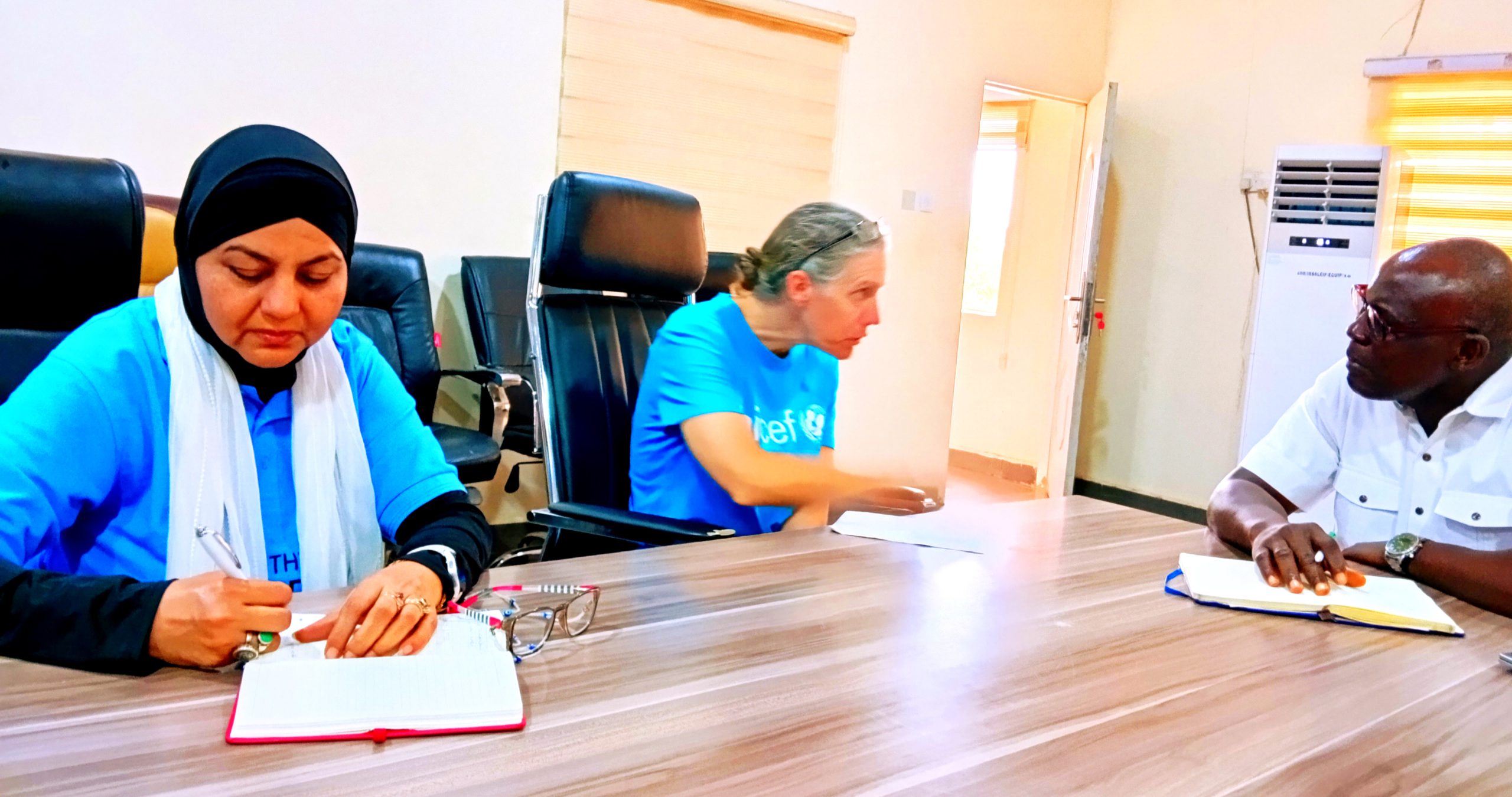
The development followed an inspection tour of Ganye and Shelleng Local Government Areas by UNICEF’s Chief of Water, Sanitation and Hygiene (WASH), Emily Rand and Chief of Field Office, Bauchi, Dr. Nhuzhat Rafique.
Related news
Unicef, EU-SARAH initiative hands over medical equipment worth millions to Adamawa Govt
Two more Adamawa LGs to be free from open defecation as UNICEF unveils DGIS – ASWA III
Adamawa communities vow to sustain ODF poise through disciplinary measures, bye laws
Two local governments of Jada and Guyuk have already assumed ODF status during the intervention of ASWA II with ASWA III on the verge of replicating such feat in Ganye and Shelleng LGs.
The intervention is being implemented under the Accelerating Access to Water and Sanitation for All (ASWA III) programme, funded by the Netherlands Government and implemented by UNICEF in partnership with the Adamawa State Government.
Speaking after inspecting the facilities and community activities, Rand said the programme had recorded varying levels of progress across the two LGAs, with some communities significantly advanced in their quest to attain ODF status while others still had considerable ground to cover.
She, however, identified hand washing with soap as one of the critical behavioural changes that must accompany the construction and use of household toilets.
According to her, while it was encouraging to see households voluntarily constructing toilets, the ultimate objective was to ensure that people adopted hygiene practices capable of translating the intervention into improved health outcomes.
Rand disclosed that 16 water facilities in health facilities, schools and communities had either been constructed or rehabilitated, while six additional facilities were ongoing in primary healthcare centres. She added that 15 more boreholes were expected to be provided under the programme.
She said UNICEF was also implementing emergency preparedness and anticipatory action measures ahead of the rainy season, particularly in view of the risks posed by flooding and waterborne diseases.
She said cholera preparedness training had already been conducted, stressing that communities needed to remain vigilant because cholera had been reported in neighbouring areas.
Rand explained that the preparedness strategy included identifying affected households in the event of an outbreak, tracing their water sources and taking steps to decontaminate contaminated sources to prevent further transmission.
She commended RUWASSA and the participating communities for the level of mobilisation and ownership witnessed during the inspection, particularly the active participation of women, men and WASH committees.
“What was exciting was the community engagement and the WASH committees being strong and vocal,” she said, noting that the progress represented a broad movement towards healthier and more sustainable communities.
Dr. Rafique, on her part, said the strongest evidence of the programme’s success was the extent to which communities had taken ownership of the sanitation drive without relying on financial or material incentives from UNICEF.
She explained that WASH committees were primarily providing education, awareness and facilitation, while households were constructing toilets with their own resources.
According to her, even poorer households were being supported by other members of their communities to construct toilets, demonstrating a strong sense of collective responsibility.
She said community members were increasingly able to connect poor sanitation and hygiene practices with illnesses associated with contaminated environments, including typhoid and other diseases.
Rafique said such behavioural transformation offered greater prospects for sustainability because the knowledge acquired by communities could outlive individual infrastructure.
She cited an instance where a household whose toilet had collapsed had already constructed another one and continued using it, describing the development as evidence that the sanitation culture was becoming embedded in the community.
Also speaking Esly Emmanuel, the General Manager of RUWASSA explained that the ODF process was deliberately designed without direct subsidies for household toilet construction. Instead, communities were taken through a process of awareness creation and facilitated to understand the health implications of open defecation.
He said communities were provided with options for toilet designs and encouraged to construct facilities according to their circumstances.
According to him, the approach was designed to transform sanitation from an externally imposed project into a community-owned practice.
He added that children and young people were also being incorporated into Community-Led Total Sanitation activities so that improved hygiene behaviour could become part of their upbringing.
On climate change, Emmanuel said ASWA III had introduced climate-resilient designs for water and sanitation infrastructure, taking into account the specific environmental challenges confronting different parts of Adamawa.
He explained that UNICEF had supported the Federal Government, through the National Water Resources Institute, to review existing facilities and identify climate-related risks across different regions.
For Adamawa, he said two major designs were being considered because the state faces contrasting climate threats, including desertification in the northern axis and flooding and flash floods in other areas.
He said the designs were also intended to address recurrent flooding associated with heavy rainfall and the release of excess water from Cameroon’s Lagdo Dam.
Although some challenges had emerged with the initial deployment of the designs, Emmanuel expressed confidence that subsequent procurements would address the identified shortcomings and produce more robust infrastructure capable of withstanding strong winds and flooding.
On the state’s target for ODF certification, Emmanuel said five LGAs had been prioritised, with one already achieving the required milestone, while efforts were underway to take the remaining four through validation.
He expressed hope that the target would be achieved before the end of the year.
The officials also stressed the importance of local government authorities in sustaining the gains. They urged the 21 local governments to establish dedicated budgetary provisions for WASH activities and strengthen institutional structures responsible for water, sanitation, health and nutrition.