

100 million Tinubus can’t stop me from restoring fuel Subsidy – Atiku
By Mohammed Ismail
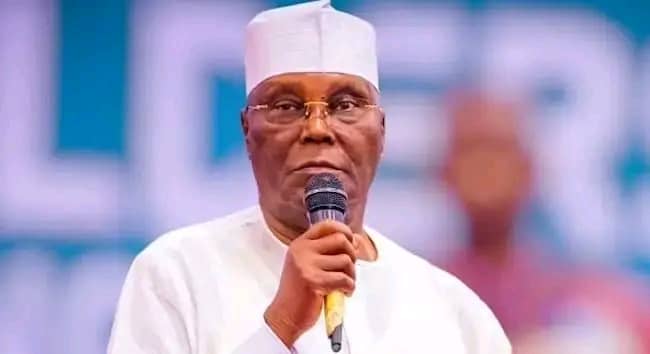
Former Vice President and African Democratic Congress (ADC) presidential candidate, Atiku Abubakar, has declared that not even “100 million Tinubus” can stop him from restoring a targeted fuel subsidy if elected president.
Atiku said the proposed intervention would be designed to cushion Nigerians from the economic hardship triggered by the removal of petrol subsidy and the subsequent rise in fuel, transport and food prices.
Related news
Anambra, FCT, Osun and the hard reality facing Obi and Atiku in 2027
Fintiri’s defection to APC informed by personal survival instincts – Atiku
He made the position known through his Senior Special Assistant on Public Communication, Phrank Shaibu, while reacting to the economic policies of President Bola Ahmed Tinubu’s administration.
Atiku accused the Federal Government of operating a double standard in its approach to economic intervention, arguing that while subsidies for ordinary Nigerians were condemned, government incentives and tax credits were being extended to major investors in the petroleum sector.
According to him, the government’s declaration that petrol subsidy had been eliminated was followed by sharp increases in the cost of transportation and essential commodities, with businesses and households struggling to cope with declining purchasing power.
He questioned why government intervention was considered acceptable when it benefited investors but was portrayed as economically harmful when aimed at protecting ordinary Nigerians.
Atiku cited the administration’s Deep Offshore Oil and Gas Projects Incentives framework, under which qualifying petroleum projects could access production tax credits ranging from $3 to $4.50 per barrel, with additional incentives capable of pushing the combined benefit to as much as $11.50 per barrel.
He also referred to audited accounts of the Nigerian National Petroleum Company Limited (NNPCL), which he said recorded about N4.84 trillion in 2023 and N7.13 trillion in 2024 as energy-security expenses and related shortfalls.
The former vice president argued that the figures raised questions about the government’s claim that fuel subsidy had been completely abolished.
“If Nigerians were paying market prices because subsidy was gone, why was the Federation still carrying trillions of naira in under-recovery and energy-security costs?” Atiku asked.
He maintained that his proposed economic intervention would not amount to a return to the opaque subsidy regime of the past.
Rather, he said the Atiku Economic Recovery Plan (AERP) would introduce a targeted, capped and transparently funded mechanism that would be independently audited and subject to a clearly defined exit strategy.
The plan, according to him, would also be accompanied by accelerated development of domestic refining capacity, increased competition in the downstream petroleum sector, improved mass transportation and measures aimed at restoring household purchasing power.
Atiku accused the Tinubu administration of practising what he described as “selective economics,” where the poor are exposed to market forces while major investors receive government-backed incentives.
He said genuine economic reform should be measured by whether citizens experience improved living standards, businesses become more productive, employment expands and household incomes can adequately meet basic needs.
The ADC presidential candidate also demanded greater transparency over beneficiaries of petroleum-sector tax credits and incentives, including the total value of revenue foregone by government and whether Nigerian investors have equal access to such concessions.
Atiku insisted that reducing the economic burden on ordinary Nigerians should not be treated differently from government efforts to reduce risks for investors.
He argued that if fiscal incentives could be justified as a means of stimulating investment and production, similar carefully structured interventions should be available to protect households from excessive economic hardship.
He therefore challenged the Tinubu administration to explain the rationale behind opposing a targeted subsidy programme for citizens while approving interventions designed to support investors.
Atiku said his proposed policy was intended to provide temporary relief while creating the conditions necessary for a sustainable transition away from dependence on imported petroleum products.
He said Tinubu’a economic reform should ultimately be judged by its impact on the welfare and purchasing power of Nigerians, rather than by political declarations or policy slogans.



[…] 100 million Tinubus can’t stop me from restoring fuel Subsidy – Atiku […]